A floppy disk transforming into a glowing cloud, symbolizing software modernization services that upgrade legacy systems to modern, cloud-based infrastructure.

Software Modernization Services

Modernize Your Legacy Software to Speed Up Enterprise Growth

Dinamicka helps you assess, update, and extend existing applications. Our legacy software modernization services cover code, architecture, interfaces, data, and integrations – with the scope shaped around your business priorities and the parts of your system worth preserving.
Contact Us
★5.0
Av. Clutch Rating
350+
Projects Delivered
40%
Faster Dev with AI
Home / Services / Software Modernization 

When Your Software Starts Holding Back the Business

Modernization starts with a specific constraint. If you're here, it means you're already feeling some inconvenience due to the outdated infrastructure. Your application may still serve, but making changes, integrating it, or maintaining it is becoming increasingly difficult and expensive. Identify where that friction affects your team and what a useful improvement would look like.

Every update takes too much effort

Small changes trigger fixes elsewhere, and new features wait behind maintenance work. We map dependencies first, then refactor the worst hotspots or separate modules where the coupling is tightest.

Teams work around disconnected systems

Employees copy information between tools, reconcile conflicting records, or rely on spreadsheets. APIs or a middleware layer can replace those manual steps while the systems that still meet your needs stay in place.

Performance no longer matches demand

Growing datasets, more users, or new workflows expose bottlenecks. A performance baseline shows whether the problem sits in application code, database queries, or infrastructure, so you fix the right layer before paying for the wrong one.

Support is getting harder to sustain

Outdated dependencies, limited documentation, and knowledge held by a few people can make maintenance unpredictable. An assessment helps prioritize updates and clarify the work needed to keep the application maintainable.

Security review uncovers new gaps

The framework, library, or server underneath no longer receives vendor patches, so known vulnerabilities stay open. We move it to supported versions and add role-based access control, encryption, and audit logging, so the next review has fewer findings to explain.

Legacy Software Modernization Services We Provide

Dinamicka offers full-cycle legacy application modernization services. Choose the scope your application needs, from a focused technical assessment to a broader modernization project. We start by finding what is actually wrong, then choose the lightest change that fixes it.
Icon that describe software assessment

Software Assessment & Modernization Planning

Our engineers review your architecture, code quality, dependencies, and security posture, then rank the findings by business risk and cost. You get a prioritized roadmap to help make an informed decision and develop a modernization strategy.
Learn more
Software Development Consulting

Code Refactoring & Optimization

We remove dead code parts to improve code structure and make maintenance easier. Our engineers update outdated dependencies, add automated tests, and fix performance hotspots. We change how the code is built without changing what it does to achieve easier maintenance, faster execution, and lower regression risk.
Learn more
Icon representing software re-architecting services

Software Re-Architecting

Our architects restructure the system around your business domains, separating modules, introducing APIs, and splitting out services only where the split pays off. You get an architecture as simple as your requirements allow, without the overhead of microservices you don't need.
Learn more
Icon representing cloud migration services

Cloud Migration

We move applications to AWS, Azure, or Google Cloud by rehosting, replatforming, or rebuilding, depending on what each workload needs. We plan migration around compatibility, running costs, deployment requirements, and the application changes involved. As a result, we deliver enhanced system availability and disaster recovery options.
Learn more
Icon representing web application development services

Web Application Modernization

Our developers rebuild the front end of aging web apps on a current framework, make them responsive, and simplify workflows that slow users down. We coordinate interface changes with backend dependencies so improvements to usability remain compatible with the application behind them. This legacy application modernization leads to a responsive interface and faster page loads.
Learn more
Icon representing mobile app development services

Mobile Application Modernization

To avoid breaking with new OS releases and store requirements, we update SDKs, refresh the interface, move to newer or cross-platform frameworks where it makes sense, and connect the app to modern backend services. Your app meets current iOS and Android compliance and delivers better performance.
Learn more
Icon representing database modernization services

Database Modernization

We redesign data models, migrate to current or cloud-managed databases, and clean up data quality, adopting distributed databases or NoSQL. The result is that your application stores, retrieves, and exchanges information through a data layer that supports automation and real-time analytics.
Learn more
Icon representing custom API development and integration services

API Modernization & Integration

Dinamicka restore legacy functions through REST or GraphQL APIs and replace brittle point-to-point connections, so new tools and third-party services plug in without touching the core. Security protocols are updated at the same time. Modernized APIs provide easier integration with cloud platforms and microservices architecture, and can be updated alongside architecture modernization as well.
Learn more
Icon representing AI implementation services

AI Enablement for Existing Applications

We integrate AI into the applications you already run, without rebuilding them. Models from OpenAI or Google, or custom ones built with TensorFlow, connect through APIs, so your team gets the new capability inside the tools they already use.
Learn more

Unsure How Much of Your System Needs to Change?

Tell us what is becoming difficult: releases, performance, integrations, maintenance, or user workflows. We can discuss the problem and the information needed to assess your options.

Our Work with Existing Software and Business Systems
Explore projects involving application development, integration, and improvements to established workflows. Each example shows a different scope of work based on the infrastructure that customers are already using.
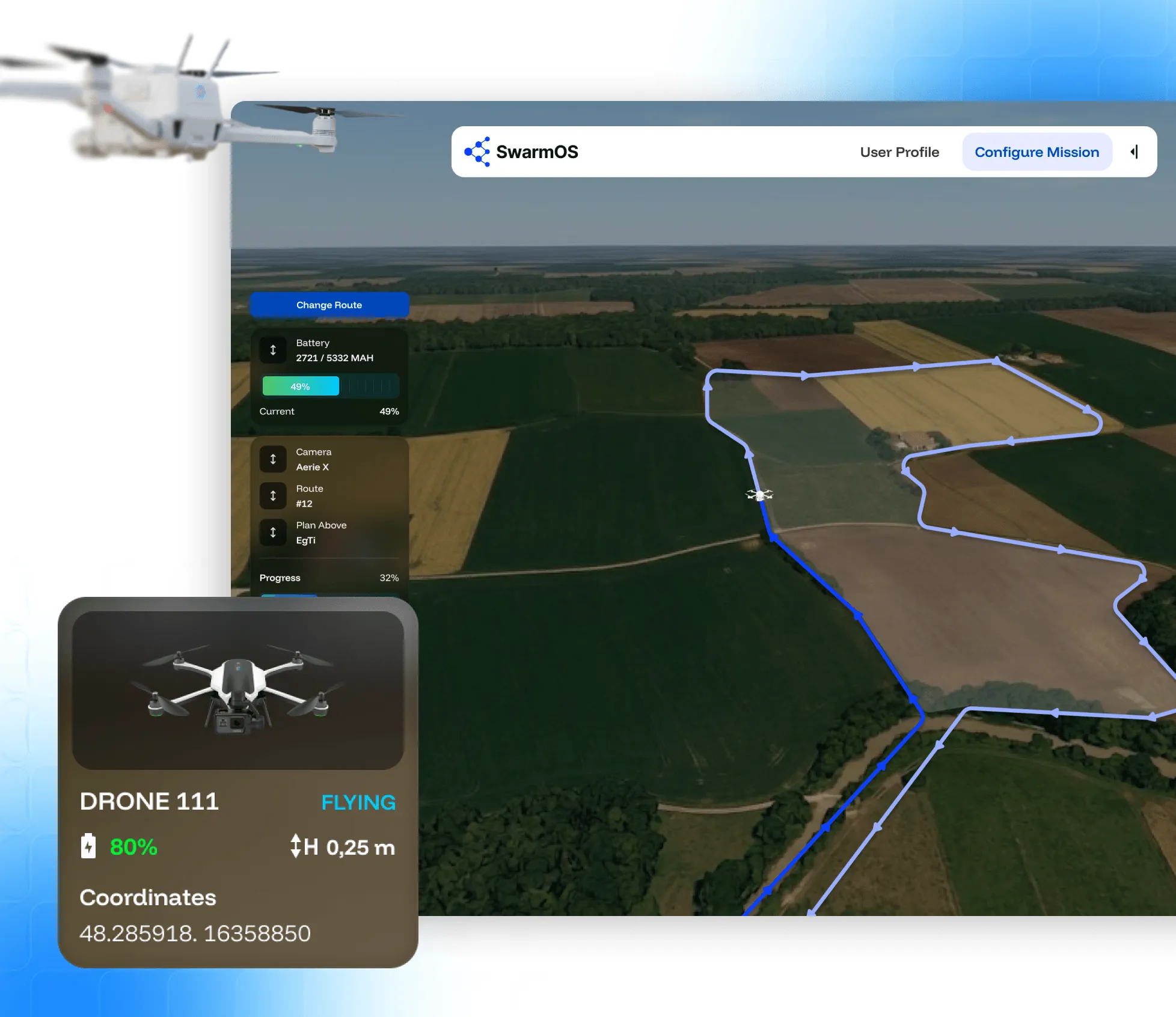
Web dashboard for real-time orchestration of a hybrid swarm of industrial drones and robots — an example of custom manufacturing software development for coordinating mixed automated fleets on the production floor.
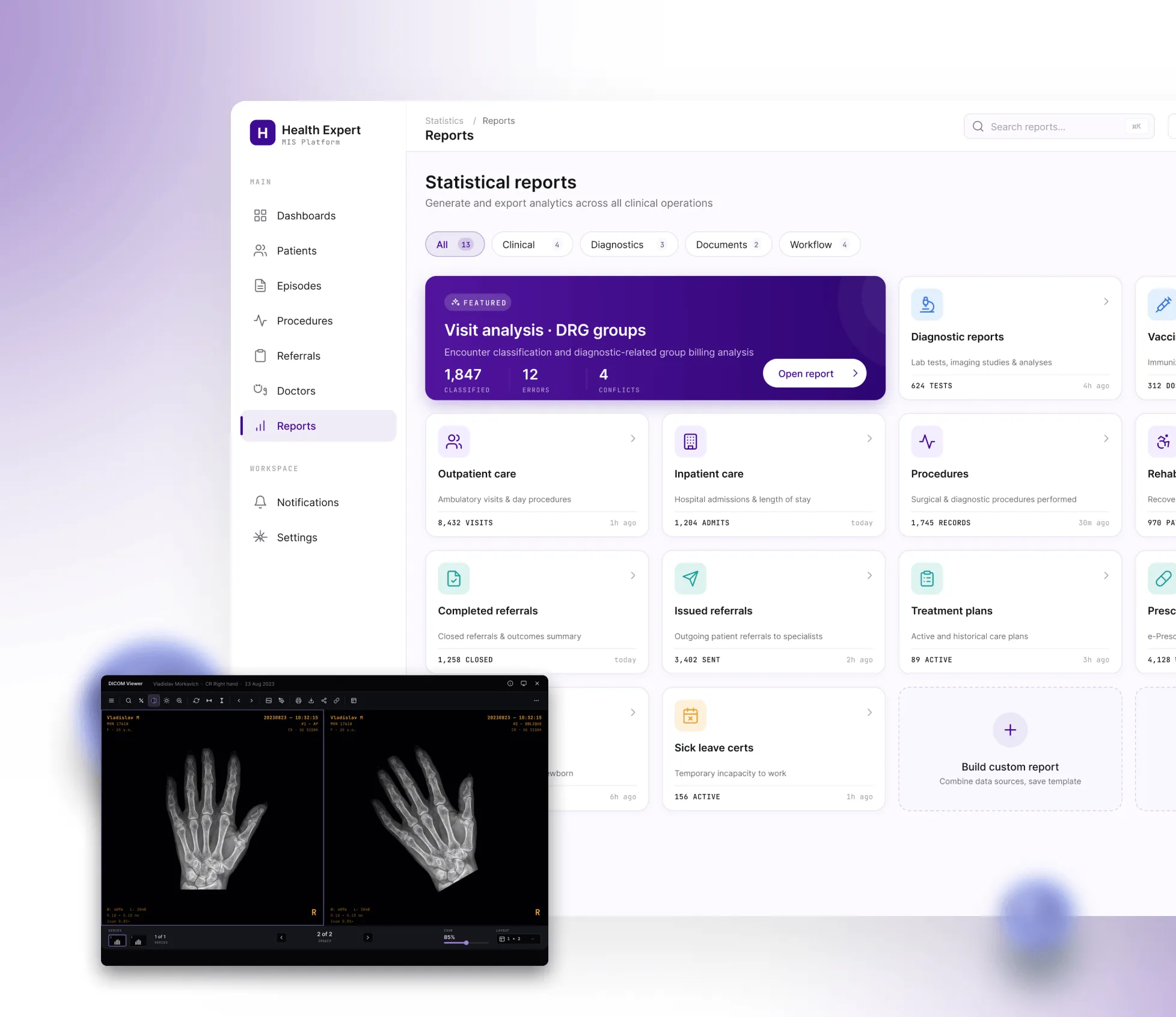
Health Expert - multi-EMR (Electronic Medical Record) system case Cover
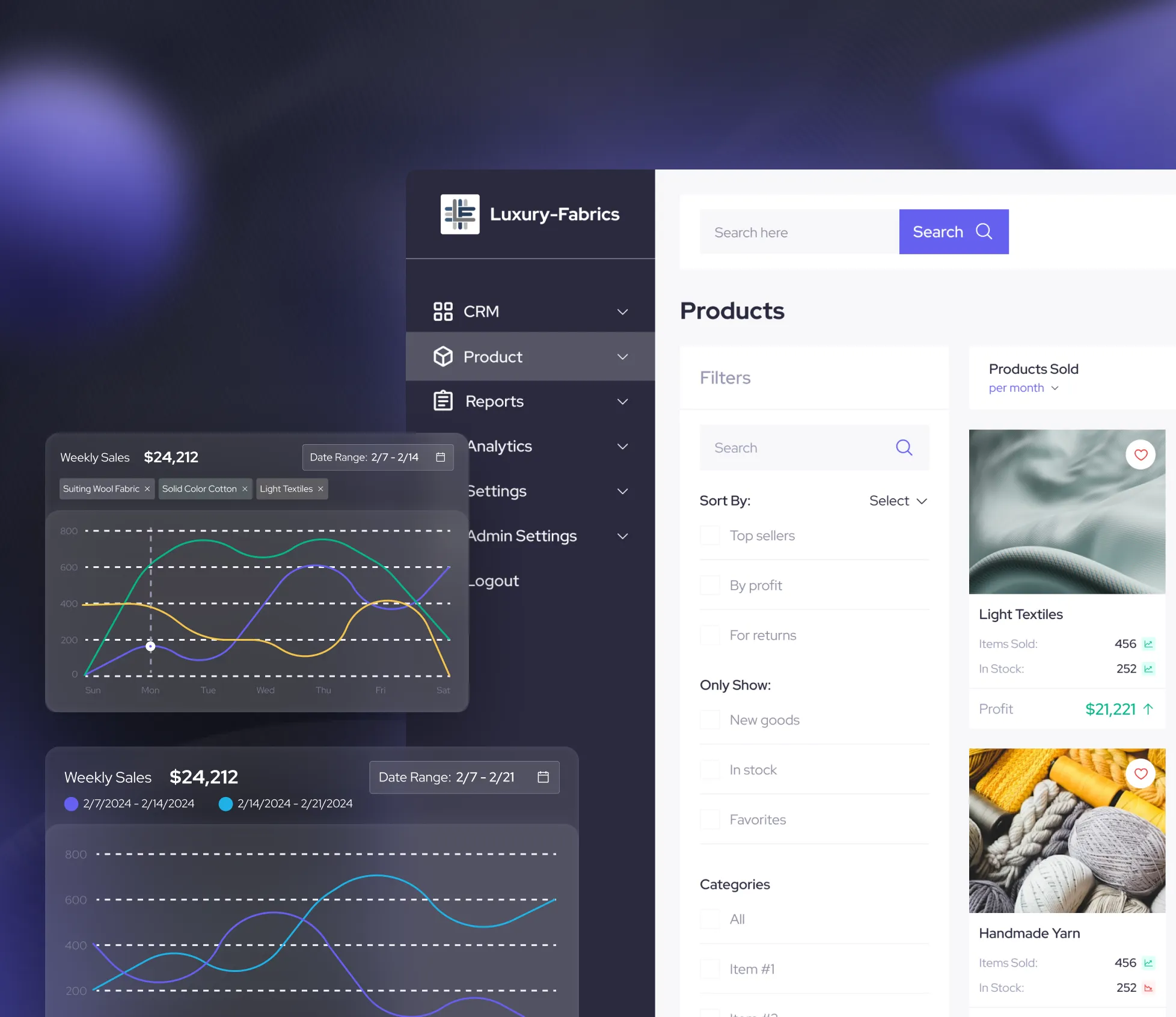
Custom CRM dashboard built for a textile manufacturing company, integrated with the client's internal database — an example of manufacturing software development company work tailored to industry-specific data systems.
Manufacturing

Frontend Rebuild for Industrial Drone Swarm Orchestration

We rebuilt the frontend and control interface that lets operators monitor and coordinate a mixed swarm of industrial drones and ground robots in real time – the layer standing between complex robotics infrastructure and the people who actually need to direct it during a live operation.
Open Case
Healthcare

EHR Platform Customization for Private Medical Networks

Customization and deployment of a medical information system (MIS) for the European network of clinics. Integration of diagnostic data (DICOM/PACS), optimized document flow workflows and full compatibility with HL7/FHIR of the EMR system.
Open Case
Manufacturing

Custom CRM Software for a US Textile Manufacturer

A tailored CRM with analytics dashboards for a textile manufacturing company that sells directly to its own customers – unifying production-side client relationships, product catalogs, sales, and reporting in one system, instead of juggling separate tools for manufacturing operations and the customer-facing side of the business.
Open Case
1 / 3
More Cases
Our Legacy Software Modernization Process
Dinamicka build software modernization process around a full cycle of stages which are coordinated with stakeholders, data and work processes. The delivery scope has clear responsibilities and acceptance criteria to prevent time loss and align the result with your business goals.
Next step
Completed
01Analysis and Audit
At the beginning of our software product modernization services, we conduct an in-depth code review and assess the existing architecture to find areas for improvement. We identify and assess obsolete components, bottlenecks, technical debt, and risks.
02Modernization Planning
Our specialists choose the optimal strategy of modernization. It can include legacy code refactoring, migration, partial or complete software rebuild, to allow the resulting system satisfy your business needs. Actions are prioritized based on their urgency and business impact. Modernization risks and accompanied costs are also defined.
03Architecture Design
Updated system architecture should be secure, scalable, and available for integration with necessary third-party services. It is determined whether it is necessary to use cloud infrastructure for your system, or implement microservices for faster performance and reliability.
04Development and Refactoring
Once the changes are defined, our developers start the modernization work: redevelopment, code refactoring, or system optimization. New modules and third-party services are integrated step by step, APIs are created or modified, and backward compatibility is kept where needed.
05Testing and Quality Assurance
When development is finished, we run manual and automated testing, scan security, and evaluate data transfer processes. To minimize risks, we run a canary deployment: a pilot rollout to a small user group to assess performance after modernization.
06Deployment and Ongoing Support
Modernized software is deployed in the live environment and checked for faults. Our specialists perform post-launch audits, monitor the updated system, and fix issues as they arise. Staff training is provided where needed to help users adapt. Ongoing support continues through our software maintenance and support services.

Tach Stack That Fit Your Existing Application

Frontend & Backend

Your existing stack sets the starting point. We upgrade what can be upgraded, such as an end-of-life framework version, and move to a different stack only when the current one blocks what the business needs.
HTML5 / CSS3
React
Angular
Vuejs logo Vue.js
Vite
Python
Django Django
PHP
Laravel
Ruby
Node.js icon Node.js
java icon Java
.NET
FastAPI backend development framework FastAPI
Flutter
Kotlin
Next.js

Infrastructure & Integrations

Most legacy systems need three things around the code: a database that scales, infrastructure that deploys repeatably, and APIs that let new tools connect. This is the toolset we use for that.
MongoDB icon MongoDB
PostgreSQL PostgreSQL
MySQL
AWS icon AWS
google cloud platform GCP
Azure Azure
GitLab GitLab
Nginx Nginx
Stripe Stripe
PayPal PayPal
GoogleAI GoogleAI
OpenAI OpenAI
TensorFlow TensorFlow
Kubernetes Kubernetes
Docker Docker

Modernization Around Your Business Workflows

Different applications need different software modernization solutions. With proven experience in logistics, manufacturing, real estate, e-commerce, and other sectors, we understand how software modernization services can be different in every industry. Here is what we typically modernize in each.

Logistics & Supply Chain

Dispatch runs on a TMS that updates overnight, carriers send EDI files by email, and drivers confirm deliveries on paper. We put an API layer around the existing systems and add a driver app, so statuses update live and customers stop calling to ask where the shipment is.

Real Estate

Legacy real estate software often lacks integration options – listings arrive over an outdated MLS feed, then get retyped into the CRM and onto the website. We move the integrations to current standards such as the RESO Web API and connect the systems, so a listing is entered once and agents can work from their phones.

E-commerce

The storefront slows down on sale days, the checkout still runs on a payment flow from years ago, and nobody can say which third-party scripts load on the payment page. We rebuild the checkout layer, move payments to current gateways, and load-test before the next sale, so peak traffic turns into orders instead of timeouts.

Healthcare

Legacy healthcare systems store patient records in one system and scheduling in another, and sharing data between them depends on custom interfaces that few people on staff still understand. We replace those links with standards-based integrations such as FHIR and rebuild access control and audit logging, so providers see current data and security reviews have fewer findings to explain.

Manufacturing

A production line can run for years on a PLC nobody dares to touch, while its data never reaches the ERP. We connect legacy PLCs and sensors to live dashboards and extend your existing ERP around them, so nothing has to be ripped out.

Fintech

Payments still move in legacy message formats, and every integration partner needs its own custom connector. We update payment flows to ISO 20022, expose core functions through APIs, and tighten authentication and audit trails, so a new partner connects through one interface instead of a custom build each time.

Tell Us What Your Current Software Needs to Do Better

Share the application you use, the problem you want to solve, and any technical or business constraints. We’ll review your request and discuss a suitable starting point for the project.

Why Companies Choose Dinamicka for Software Modernization

Choosing a reliable software modernization company comes down to whether they can change your system without breaking the business that runs on it. Here is what that looks like working with us.
Proven Track Record Icon

Proven Track Record

Dinamicka Development has completed more than 350 projects across real estate, logistics, manufacturing, healthcare, and e-commerce. Our expertise is verified by Clutch and GoodFirms reviews.
Icon representing following the clear and transparent process

Low-Risk Delivery

Modernization runs in stages, with a pilot rollout to a small user group before full release and backward compatibility where needed, so the system you depend on stays in use while it changes.
agile icon

Full-Cycle Support

We cooperate with you from the first idea of legacy system modernization, to the support stage when the product is deployed. All the issues arising are investigated and fixed as soon as possible.
AI-Assisted Development Icon

AI-Assisted Engineering

We use AI coding tools such as Claude, Cursor, and GitHub Copilot to map unfamiliar legacy code, draft tests, and speed up refactoring. Engineers review every change, so speed doesn't cost correctness.
List icon

Transparent Process

Each project has its own dedicated channel and a work management board where you can follow progress in real time. After requirements are final, you receive an estimate with a cost breakdown and timeline within 3 business days.

Let's discuss your project in a 30-min consultation

Book a Free Call

What Clients Say About Working with Dinamicka

Dinamicka gained customer trust as a legacy software modernization company through its dedication to provision of high-quality software development, close attention to customers’ needs, and putting its best efforts into every project it works on. Read client feedback on our engineering work, communication, and project delivery.
Clutch badge displaying a 5-star rating that confirms verified client reviews and high satisfaction scores for Dinamicka's IT development services
5 star rating
Dinamicka Development has successfully developed the client's platform, taking it from development to deployment seamlessly. The team is available, responsive, and collaborative via Jira and Slack, and their Agile methodology knowledge is excellent. Moreover, they're efficient and professional.
CEO & Founder, Digitalgo
Read full Review
5 star rating
The Dinamicka Development team exceeded the company's expectations as they were able to match the UX design they wanted while complying with coding standards. The company describes the team as experienced since they were able to handle all of the project's challenges efficiently and effectively.
Co-Founder, Health App
Read full Review
5 star rating
The team was able to deliver the project approximately eight to nine months after partnering with the company, who was satisfied with how everything was handled. The team was able to meet most of their deadlines, and maintained a constant communication channel with the company.
Founder & CEO, Startup
Read full Review

Certifications that Build Confidence
Dinamicka Development is constantly moving towards becoming the leading bespoke software development company in Eastern Europe. We expand our industry knowledge, confirming it with distinguished certifications. These certifications ensure you're partnering with a team that meets industry standards.
Nielsen Norman Group UX Certification badge earned by a Dinamicka expert

NN/g UX Certified

Nielsen Norman Group, UX Certificate
ISO 9001:2015 Quality Management certification held by Dinamicka

ISO 9001:2015

Quality Management Certificate
Microsoft MCSA Web Applications certificate earned by a Dinamicka expert, 2018

Microsoft MCSA

Web Applications Certificate
Meta Front-End Developer Professional Certificate held by a Dinamicka expert

Meta Certified

Front-End Developer Professional Certificate
AWS Certified Developer – Associate badge held by a Dinamicka expert

AWS Developer

Certified Associate
AWS Certified Solutions Architect – Associate badge held by a Dinamicka expert

AWS Solutions Architect

Certified Associate

Software Modernization Services: Answers to Your Questions

Software modernization is the process of updating an existing application so it can meet current business and technical needs. It may involve code, architecture, user interfaces, data, integrations, or infrastructure. The appropriate scope depends on the application’s limitations and the value of retaining its existing capabilities.

That depends on the constraints. Some applications need targeted refactoring, platform updates, or better integrations. Others require substantial redesign or replacement. An assessment should identify what can remain and compare the cost and risk of each option before a decision is made.

Exact timelines for application modernization depend on the scope and the conditions for releasing changes. A focused component update differs from replacing an interconnected application. Planning should account for technical assessment, implementation, testing, data migration where required, and the availability of people who understand the system. Rough estimates vary from 3 months for simple rehosting to more than 1 year for a full rebuild.

Start with an audit of code quality, security, and technical debt, then match what it finds to the situations below. No single approach fits every system, and one application often needs different treatment for different parts.

ApproachWhen it may fitWhat to consider
Retain and extendThe core application remains useful, but a workflow or integration is missingNew features will still depend on the existing system
RefactorInternal code structure makes changes difficultArchitectural or platform constraints may remain
Rehost or replatformHosting, runtime, or platform limitations are the main concernMoving the application may not resolve code or workflow problems
Re-architectComponent dependencies restrict delivery, scaling, or integrationTransition work and operational complexity need planning
Rebuild or replaceThe current application cannot reasonably support the required changeBusiness rules, migration, user adoption, and replacement options need careful assessment

For the buy-or-build side of the last row, see our guide to build vs. buy software in 2026.

Cost depends on the codebase, dependencies, required changes, data migration, testing, and rollout constraints. An initial assessment helps define the scope and reduce uncertainty. For a useful estimate, share the application’s purpose, current stack, main problems, and any limits on budget or timing.

We plan work in phases so the existing system stays in use: new modules connect step by step, backward compatibility is kept where needed, and releases start with a pilot group before full rollout. Some cutovers, such as a database migration, may need a short planned maintenance window, which we agree with you in advance.

That’s the norm for legacy systems, and it doesn’t block a modernization project. We fill the gaps from three sources: the code and its dependencies, how the system behaves in daily use, and the people who run it. We interview the staff who work in the system every day, and whoever still remembers why it works the way it does, then check what they tell us against what the code actually does. What we learn becomes documentation you didn’t have before, so the next team doesn’t start from zero.

Choose the one that looks at your system before it quotes a price. A fixed estimate given without seeing the code is a guess, and you end up paying for the guess later. Ask every candidate, including us:

  • What have you modernized before, and what happened after launch? Look for similar stacks or industries, and ask what broke and how it was fixed.
  • How do you decide between refactoring, re-architecting, and rebuilding? A good answer starts with an audit, not a favorite technology. Be wary of anyone who recommends a full rewrite for every system.
  • How will the system keep running during the work? Expect phases, a pilot group, and a rollback plan, not a promise of zero risk.
  • How do you test, and who verifies the migrated data? Ask for names and methods, not “our QA team”.
  • Who is responsible after launch? Support terms and who owns the documentation should be written down before work starts.

A proposal that lists what is still unknown, and how the audit will resolve it, is more trustworthy than one that has an answer for everything.

Do you have an idea?

We’ll Help You Realize It

WHAT HAPPENS NEXT?
We’ll carefully review your requirements and respond within 2 business days.
We can sign an NDA before discussing cooperation for your information’s security.
After finalizing details, we’ll provide a project estimate and timeline within 3 business days.


    By sending this form I confirm that I have read and accept the  Privacy Policy