

Custom IoT Development Services
Custom IoT Solutions for Real-Time Visibility & Business Insights
Smart Business Transformation with IoT Technology
Global IoT market volume expands at 10–23% annually depending on the segment. For businesses that have not yet connected their assets to a data layer, the cost of waiting is rising every quarter.
Full architectural compatibility
TCO optimization and no usage limits
Data security and autonomy
Unlimited scalability
IoT Software Development Services We Provide

IoT Consulting


IoT App Development

IoT Integration

IoT Data Analytics & Visualization

AIoT Integration

IoT Product Security & Testing

IoT Maintenance & Support
Not Sure Which IoT Development Services Fit Your Use Case?
Examples of Completed IoT Software Projects
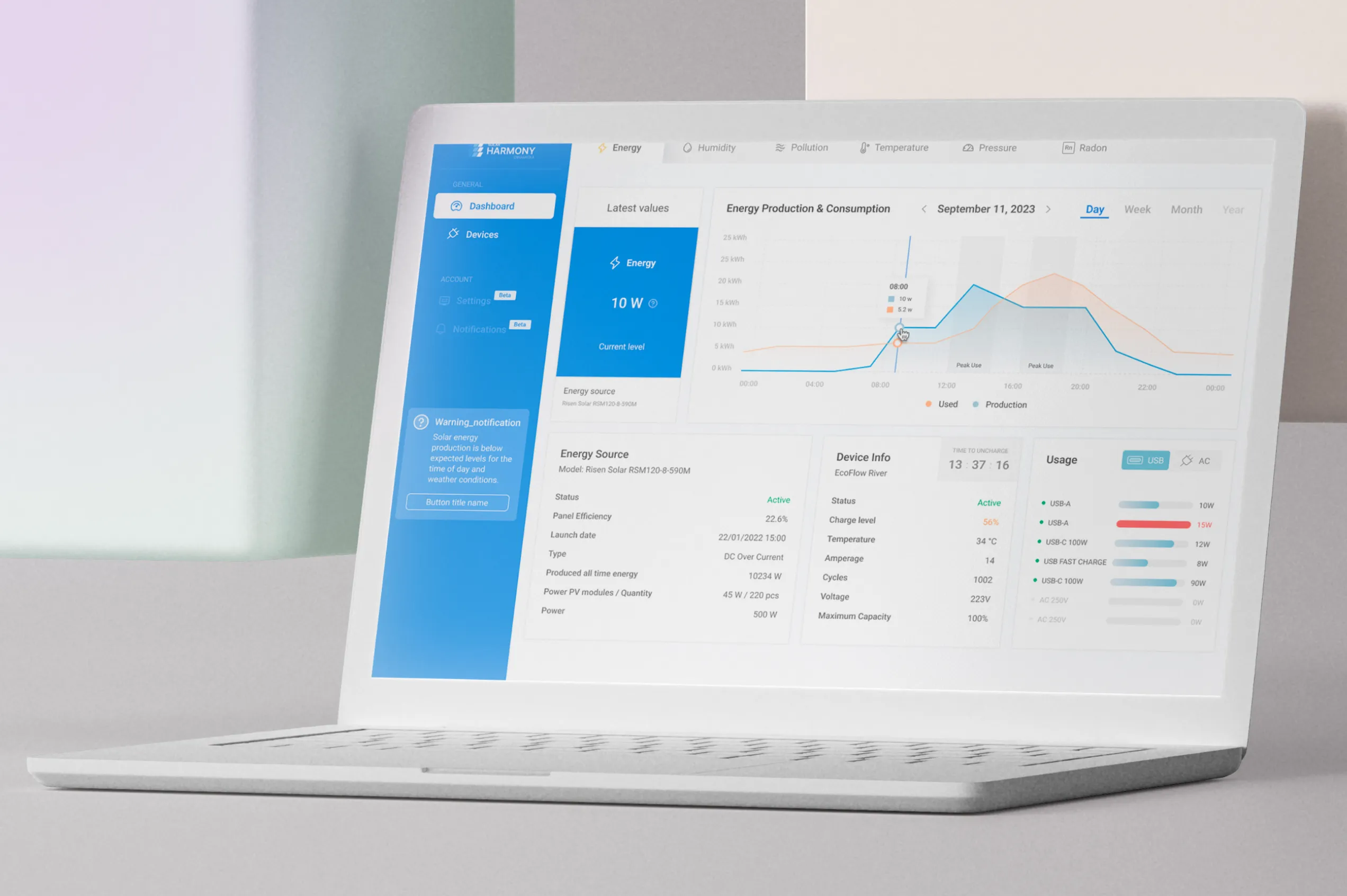
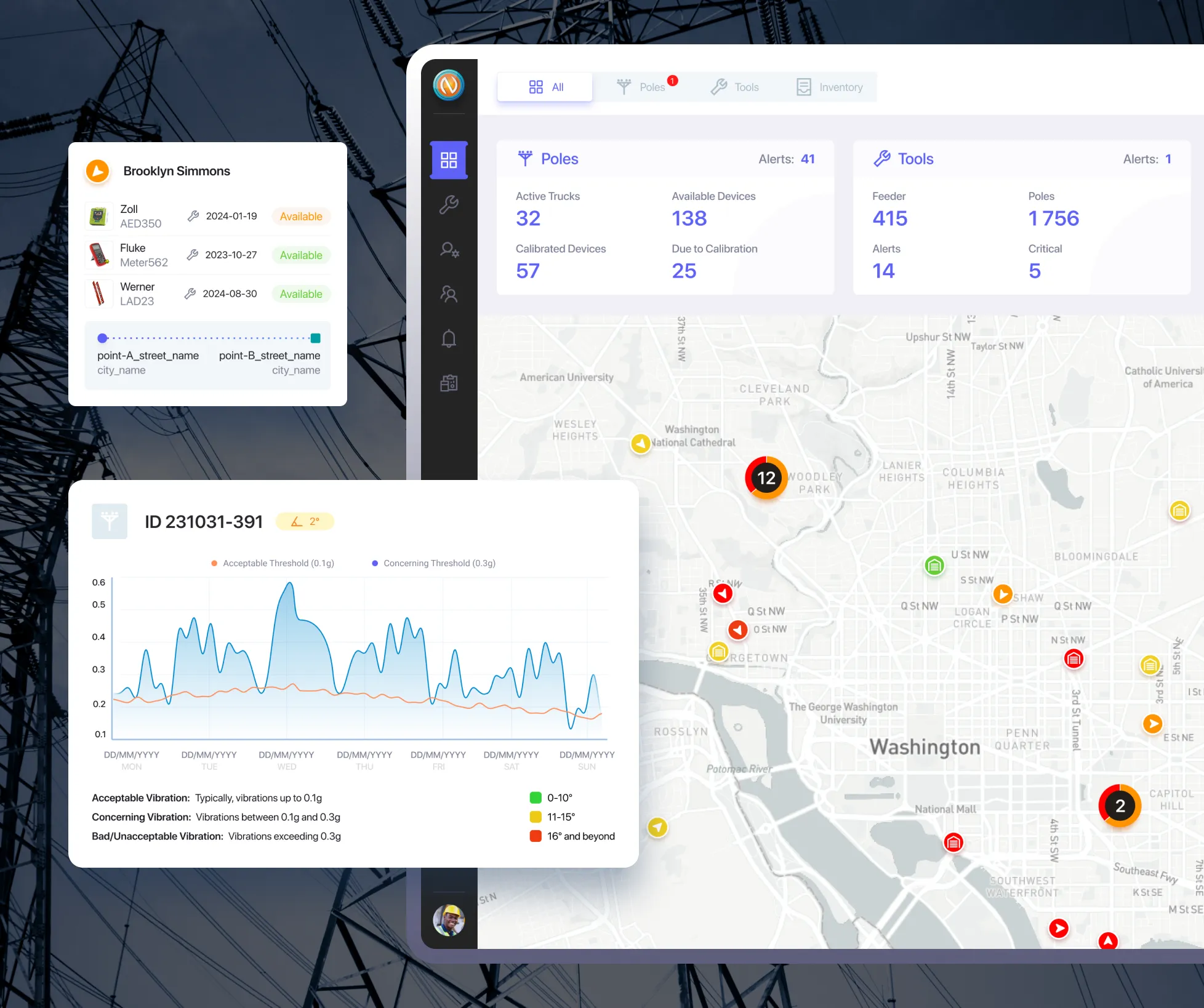
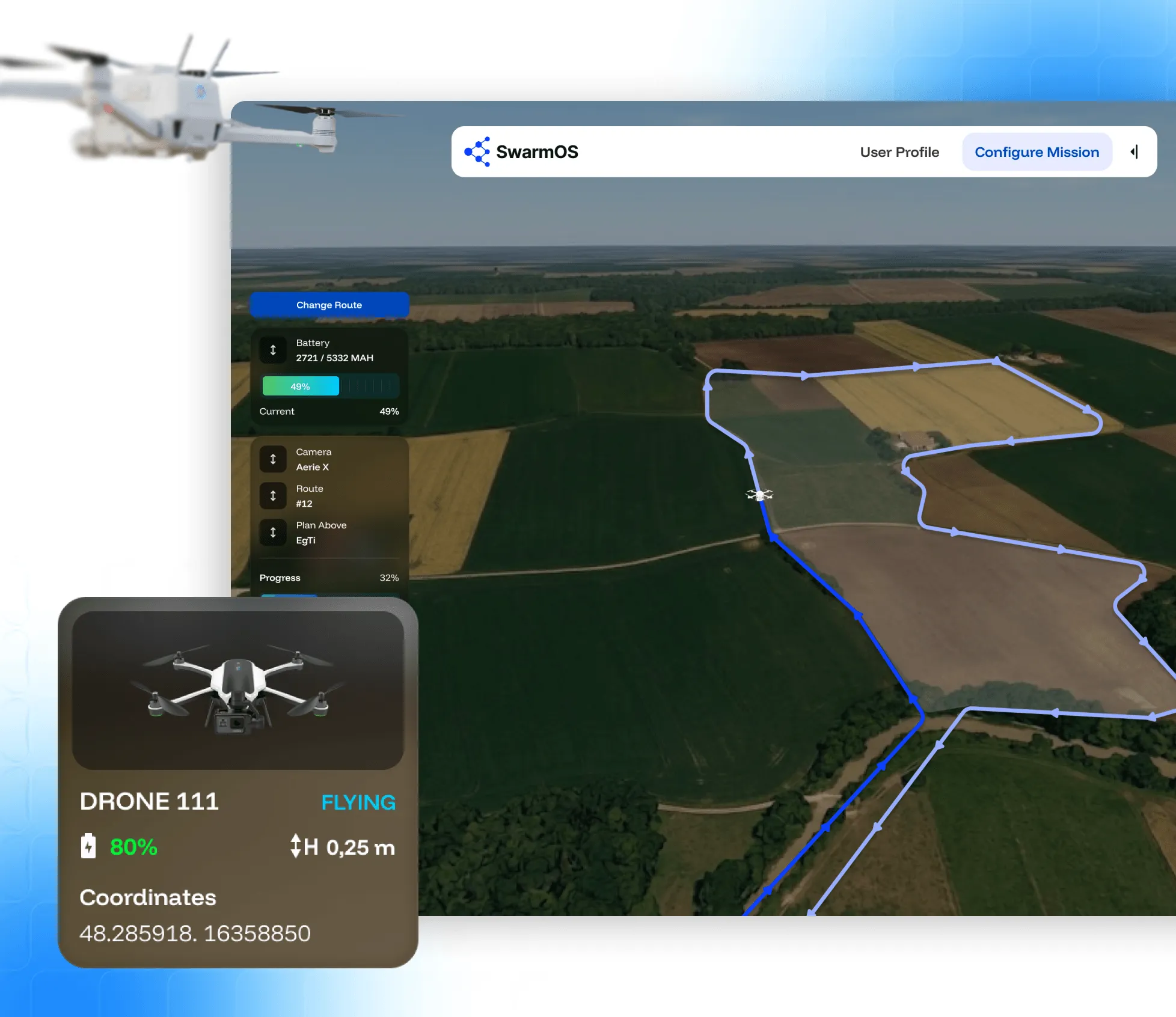
Industry-Specific IoT Solutions
PropTech IoT Engineering
Logistics IoT Solutions
Industrial IoT (IIoT) & Smart Manufacturing
Healthcare IoT Development
Precision Agriculture
Next-Gen Construction
Tools We Use in IoT Software Development Services
Front-end
 HTML5 / CSS3
 React
React Angular
 Vue.js
 Vite
ViteBack-end
 Python
  Django
 PHP
PHP Laravel
 Ruby
Ruby Node.js
  Java
Java .NET
.NETIoT Connectivity & Protocols
 MQTT
MQTT WebSockets
 REST API
 LoRaWAN
 OpenAI
 Anthropic API
 Gemini
IoT Cloud & Infrastructure
 AWS IoT Core
 Azure IoT Hub
 Google Cloud IoT
 Docker
 Kubernetes
 Nginx
NginxWhy Choose Dinamicka for IoT Software Development

Proven Track Record

AI-Assisted Development

Cross-Industry Expertise

Security & Compliance

Transparent Process
Let's discuss your project in a 30-min consultation
Book a Free CallWhat Clients Say About Dinamicka


Choose Your Engagement Model

Dedicated Team

Time & Material

Fixed Price
Certifications that Build Confidence
NN/g UX Certified
ISO 9001:2015

Microsoft MCSA
Meta Certified
AWS Developer
AWS Solutions Architect
IoT Software Development: Answers to Your Questions
Custom IoT development is the process of developing software that connects physical devices, such as sensors, wearables, industrial equipment, with centralized platforms for remote monitoring, control, and data analysis. Custom IoT software is built around the specific data types, communication protocols, and your business logic, unlike off-the-shelf solutions.
As with any software development, the cost of IoT software development depends on three variables: the complexity of the software layer, the number and type of system integrations required, and the interaction model.
A focused monitoring dashboard starts at $15,000 to $25,000. A complete IoT platform with ERP integration, analytics and multi-device management typically costs between $50,000 and $150,000. Book a free consultation for a project-specific estimate.
Our IoT projects take into account industry requirements for data security from the first sprint. Each solution includes end-to-end encryption, certificate-based device authentication, and an over-the-air (OTA) update infrastructure, so deployed devices remain patched throughout their lifecycle.
Yes. The team that built the IoT system can support and modernize the product after launch. They can monitor performance, fix bugs, patch security, and develop new features. Support covers both the software layer and the integrations, so issues don’t fall between teams.
Existing machines and equipment can be connected to IoT platforms without hardware replacement. The typical approach is to add sensors or edge devices that collect data from existing equipment and feed it into a centralized software platform via MQTT or REST APIs. We manage the software integration layer – connecting sensor data to dashboards, ERP systems, or predictive maintenance models.
An MVP development for an IoT project helps to validate connectivity, sensor accuracy, and data processing logic before committing to full-scale deployment across a device fleet. Connectivity issues, sensor and data processing inaccuracies can be tested on a minimum viable product, without expensive fixes. The MVP output is a working system with real data, not a prototype.
The best-known example of an IoT application is the smart home. The system includes sensors and remote control devices to automate home management. These can include climate control systems as well as smart cameras or robot vacuum cleaners that can be controlled remotely.
The terms for developing IoT solutions depend on their scale:
- A focused IoT module–such as a monitoring dashboard or the integration of a single device–typically takes 4-8 weeks.
- A platform of moderate complexity with multiple device types, cloud infrastructure, and ERP integration takes 3-5 months to develop.
- Complete IoT ecosystems with AI-based analytics and deployment across multiple sites can take 6-12 months, depending on the scope and number of required system integrations.