

Our client is a Kenya-based company focused on digital solutions for the transportation and logistics industry. The company needed a custom transportation management system (TMS) to help logistics businesses ship to drivers, review their route progress, manage cargo and trip data, allocate transportation jobs to drivers, etc. The system had to provide stable operation in the conditions of the African continent with low internet connectivity.

Custom Transportation Management System for a Kenyan Logistics Company
Discover how we designed and built a custom transportation management system for a logistics company in Kenya, helping automate dispatching, calculate costs and delivery times more accurately, track shipments, and operate the fleet in areas with unstable internet connectivity.
Industry
Logistics
Team Size
5 members
Country
🇰🇪 Kenya
Tech-Stack
 React.js
 TypeScript
 Vite
ViteEngagement Model
Full Product Development
Hannah and her team were absolute rockstars! From start to finish, they were professional, responsive, and incredibly skilled. If you're looking for a top-tier team that gets the job done right, look no further. Highly recommend!

Tommy
Product Owner

Transportation Business Challenges
Manual dispatching, fragmented shipment tracking, and limited operational visibility made it difficult to manage transportation processes efficiently.
Popular off-the-shelf transportation management systems did not fully meet African regional requirements and the operational workflows of Kenyan logistics companies.
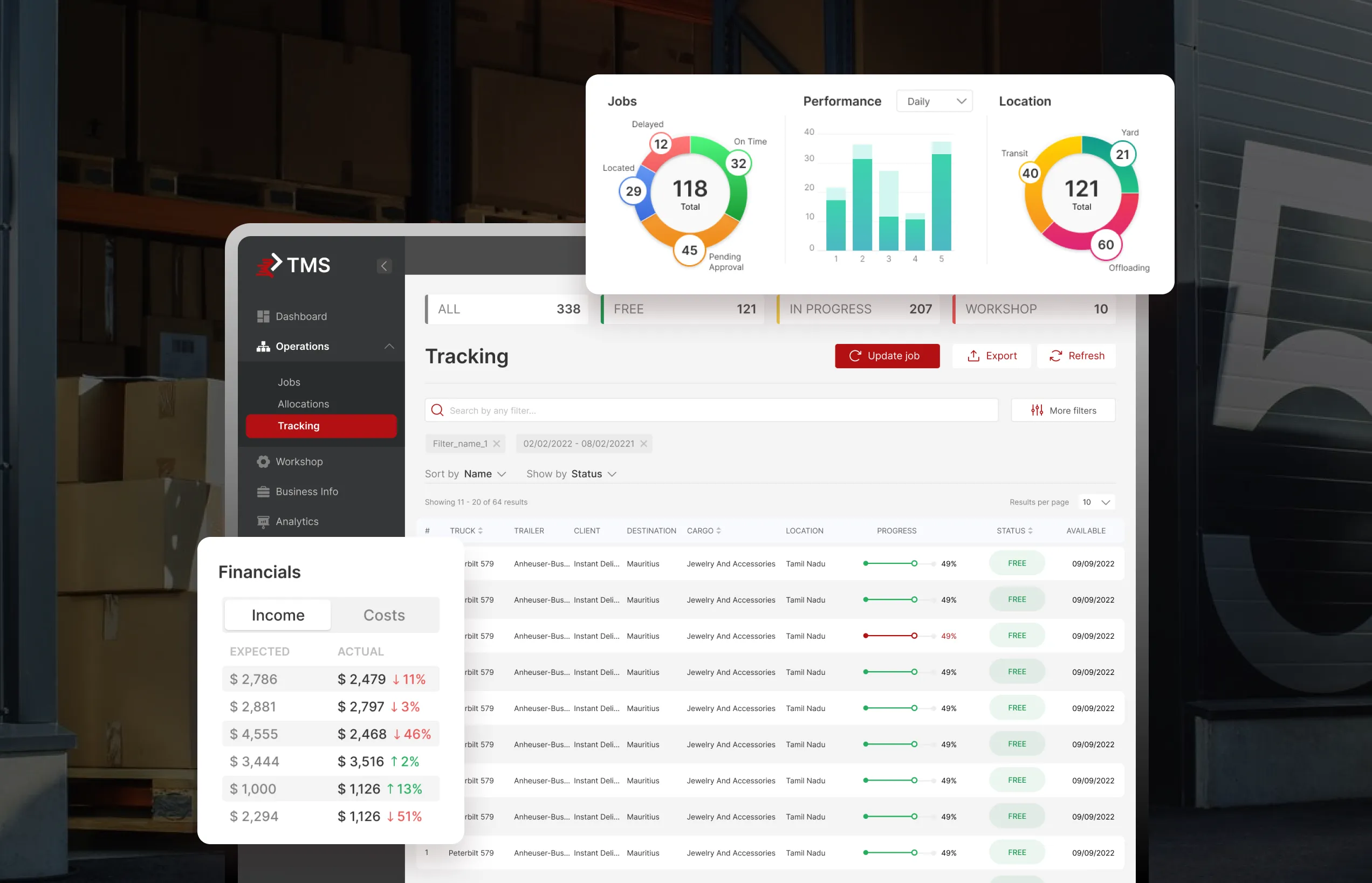
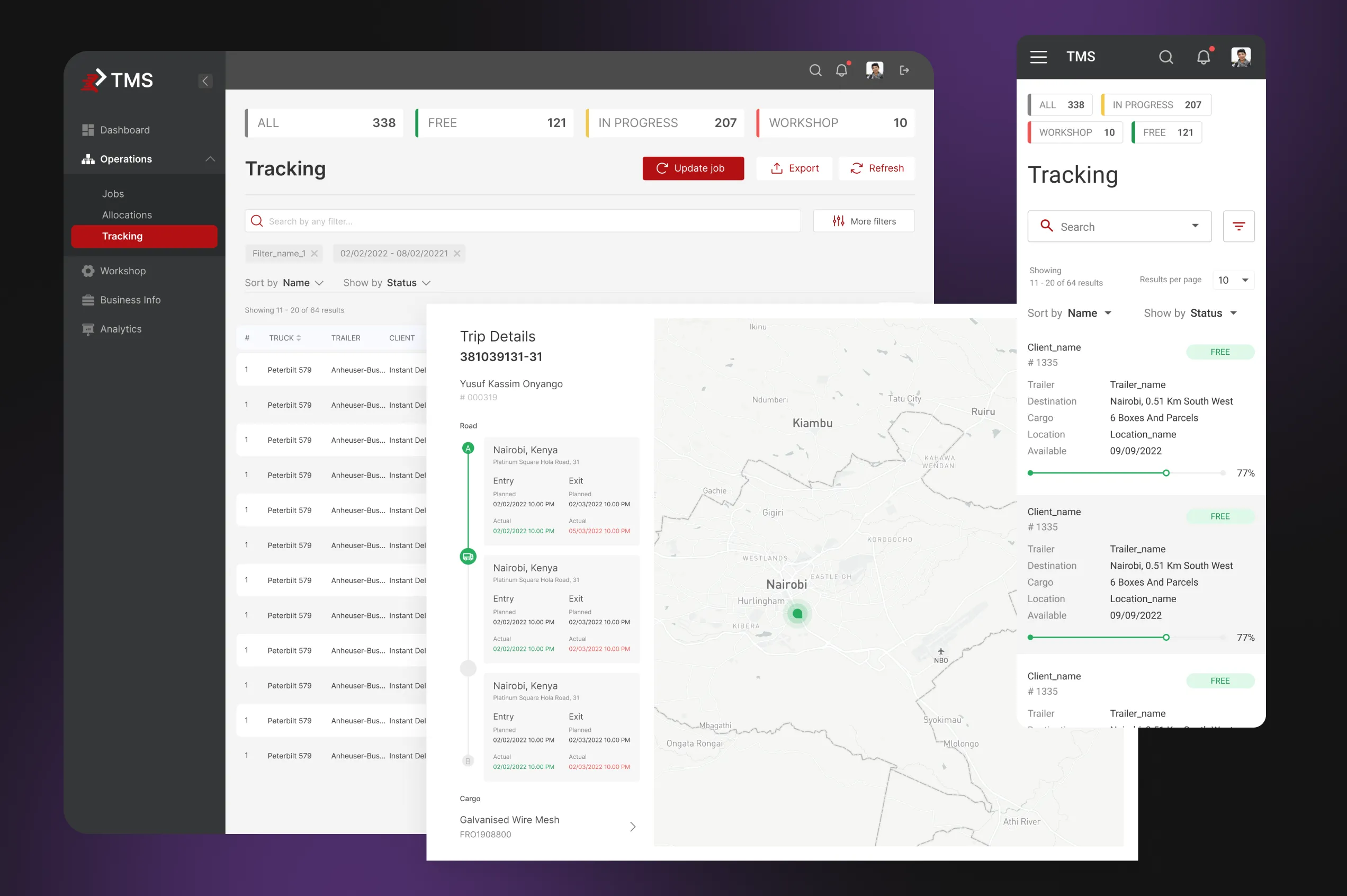
The goal was to build a custom transportation management system with a flexible TMS dashboard that would centralize fleet management and demonstrate all necessary information about shipment tracking, driver assignment, provide logistics managers with real-time operational insights, and optimize logistics routes.
One of the project’s regional challenges was poor mobile coverage and intermittent Internet connectivity. This made it difficult to track drivers continuously and to use the mobile app for drivers.
TMS Solution
The client already had a foundation – their own telematics platform tracking vehicle location and fuel data across Kenya. What was missing was the operational layer on top of it: a system where dispatchers could assign jobs, managers could track delivery progress, and the entire fleet – vehicles, drivers, cargo, and financials – could be managed from a single interface.
To solve the main challenges facing the logistics business, Dinamicka Development designed and developed a custom transport management system adapted to the work processes of logistics companies in Kenya from scratch.
Interface Design
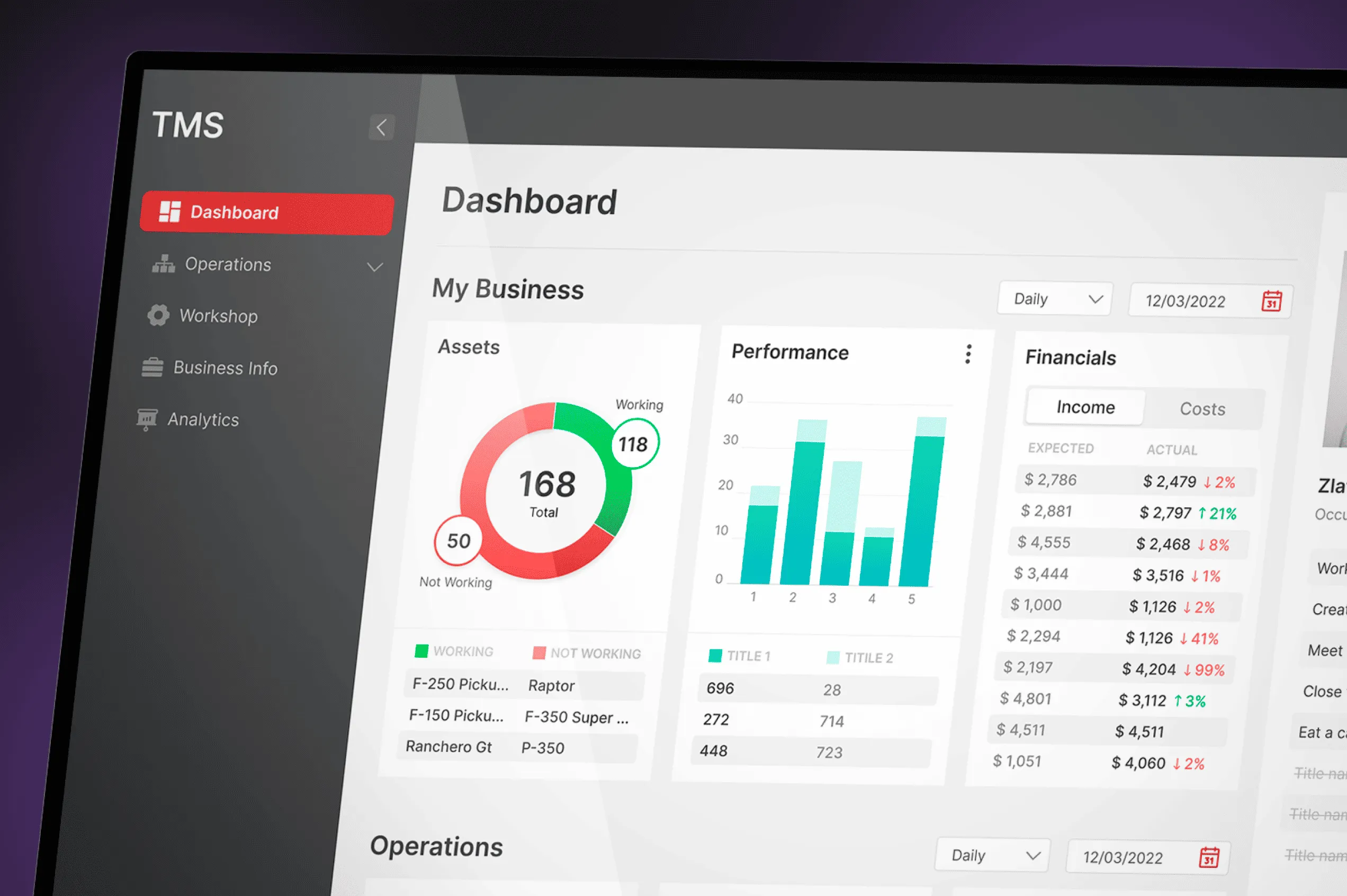
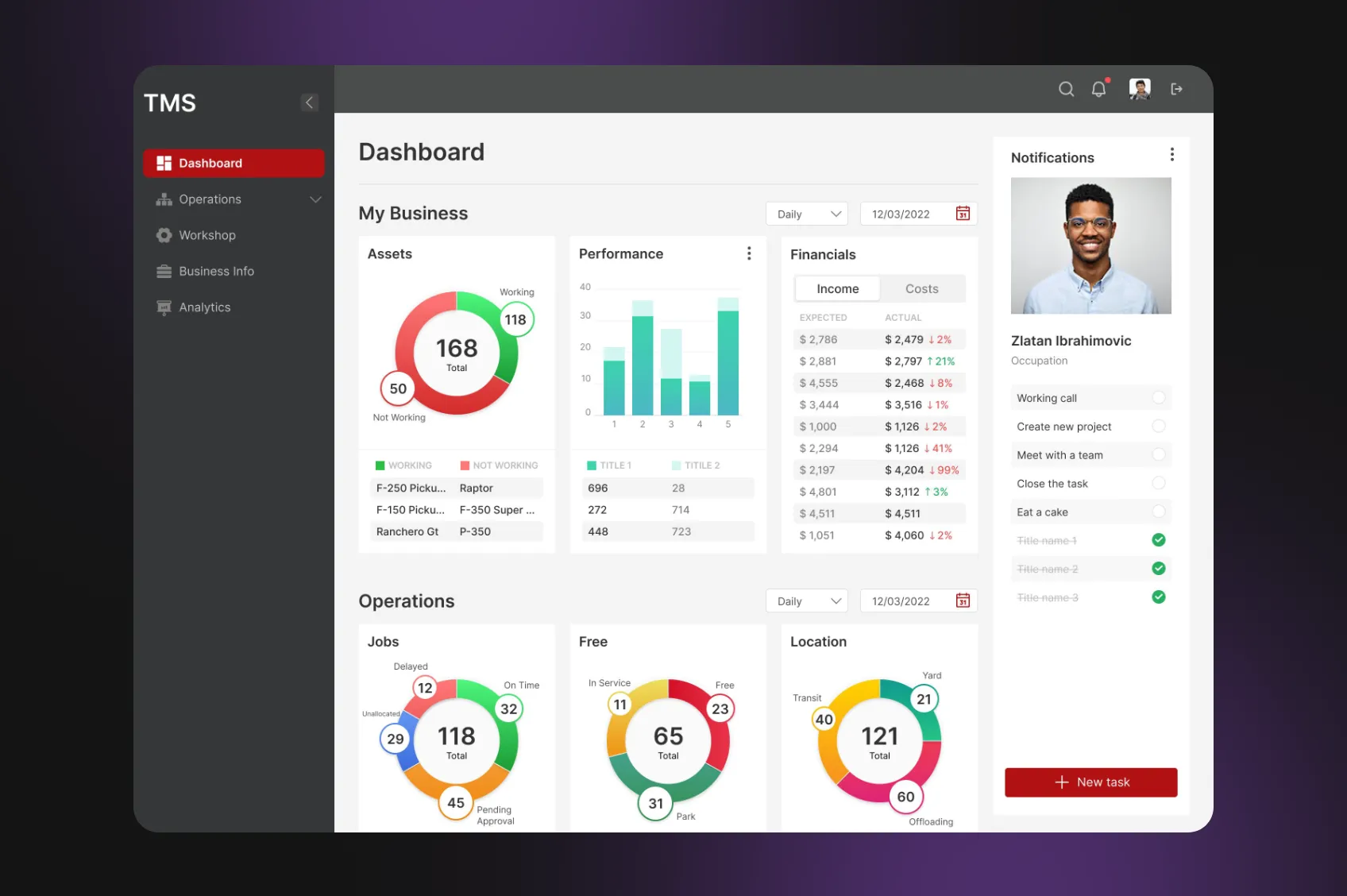
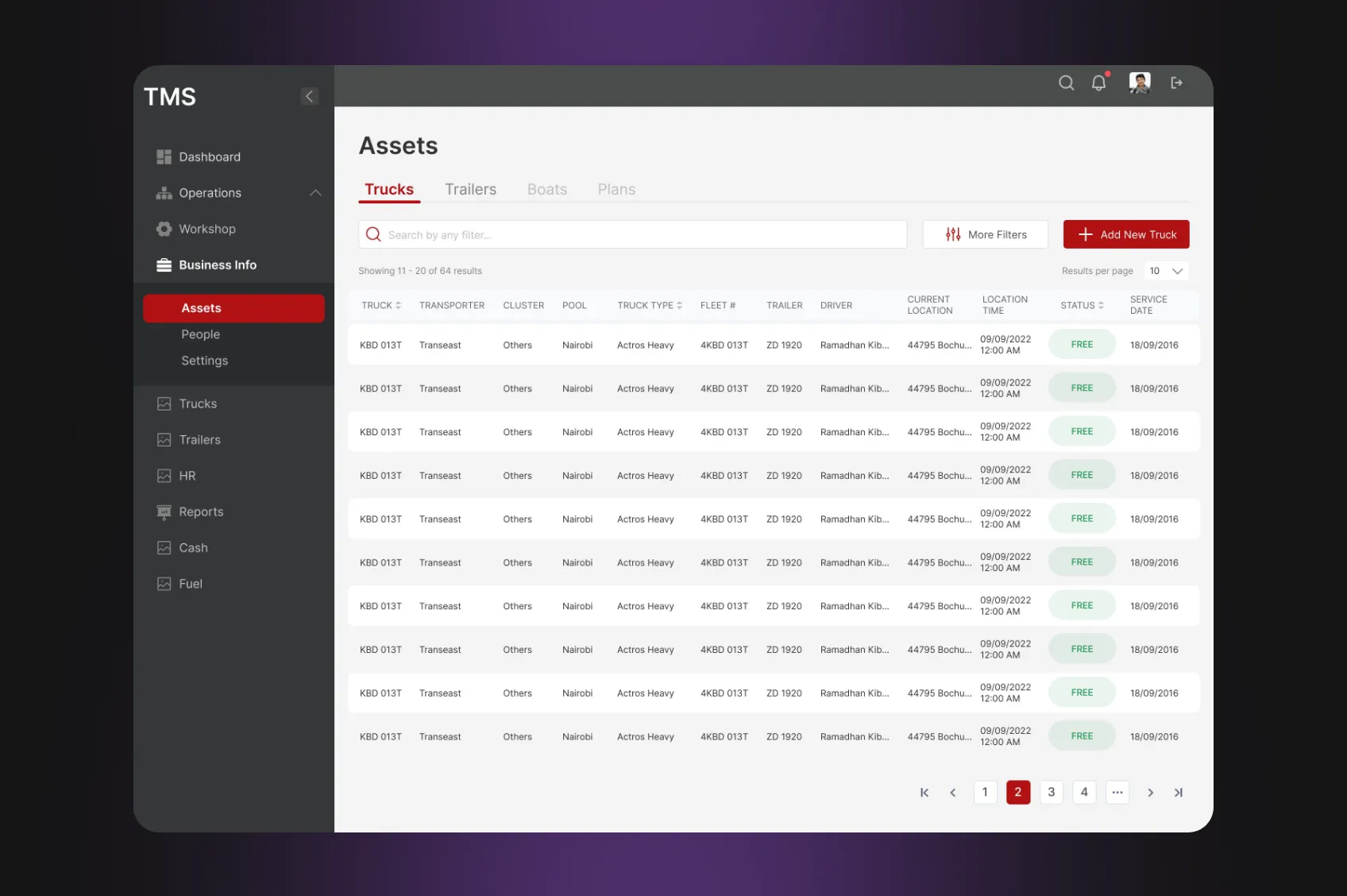
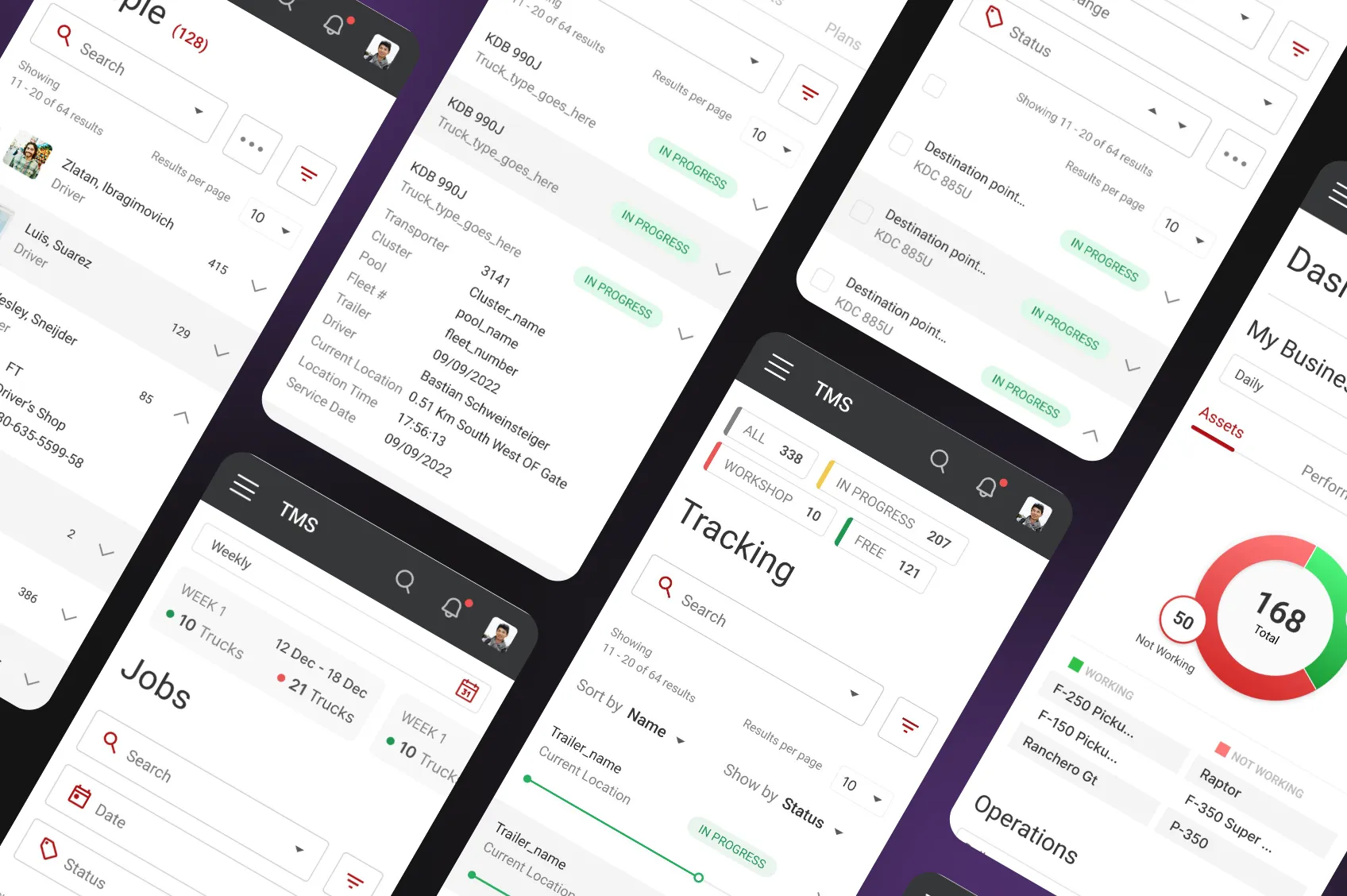
Our web design experts created the interface around how dispatchers and logistics managers actually work — not around a generic dashboard template. Instead of overloaded screens and countless fields, the transport management system dashboard presents the most important transportation data in a clear and structured way, allowing users to make faster operational decisions.
Because many employees access the platform outside the office, the interface was designed to be fully responsive, accessible on mobile and tablet devices so drivers and field managers can use it on the road without needing a desktop.
TMS Architecture & Development
Kenya’s road network creates connectivity gaps that most logistics software wasn’t designed to handle. Routes between Nairobi and Mombasa, or through the Rift Valley corridor, regularly pass through areas where mobile coverage drops to 2G or disappears entirely. Building a TMS for this environment meant designing around the assumption that connectivity would fail – not treating it as an edge case.
To solve the real-time visibility problem, Dinamicka integrated GPS telemetry directly from the client’s own platform into the TMS. This system leverages GPS technology combined with satellite and cellular (2G/3G/4G/5G) communication to allow dispatchers to see vehicle location and status in near real-time without switching between systems. When connectivity drops, the driver app continues collecting GPS coordinates, receipt photos, and delivery signatures into a local SQLite database on the device. As soon as even a 2G signal returns, the app batch-syncs all accumulated data to the server automatically – so dispatchers get a complete picture of what happened on the route, not just the moments when the driver had signal.
Shipment route optimization and instances of unauthorized vehicle use are addressed through intelligent truck dispatch based on availability. This solution solves a wide range of operational challenges – from improving route planning efficiency and reducing fuel consumption to generating detailed reports on trip performance, including cost allocation and fleet efficiency.
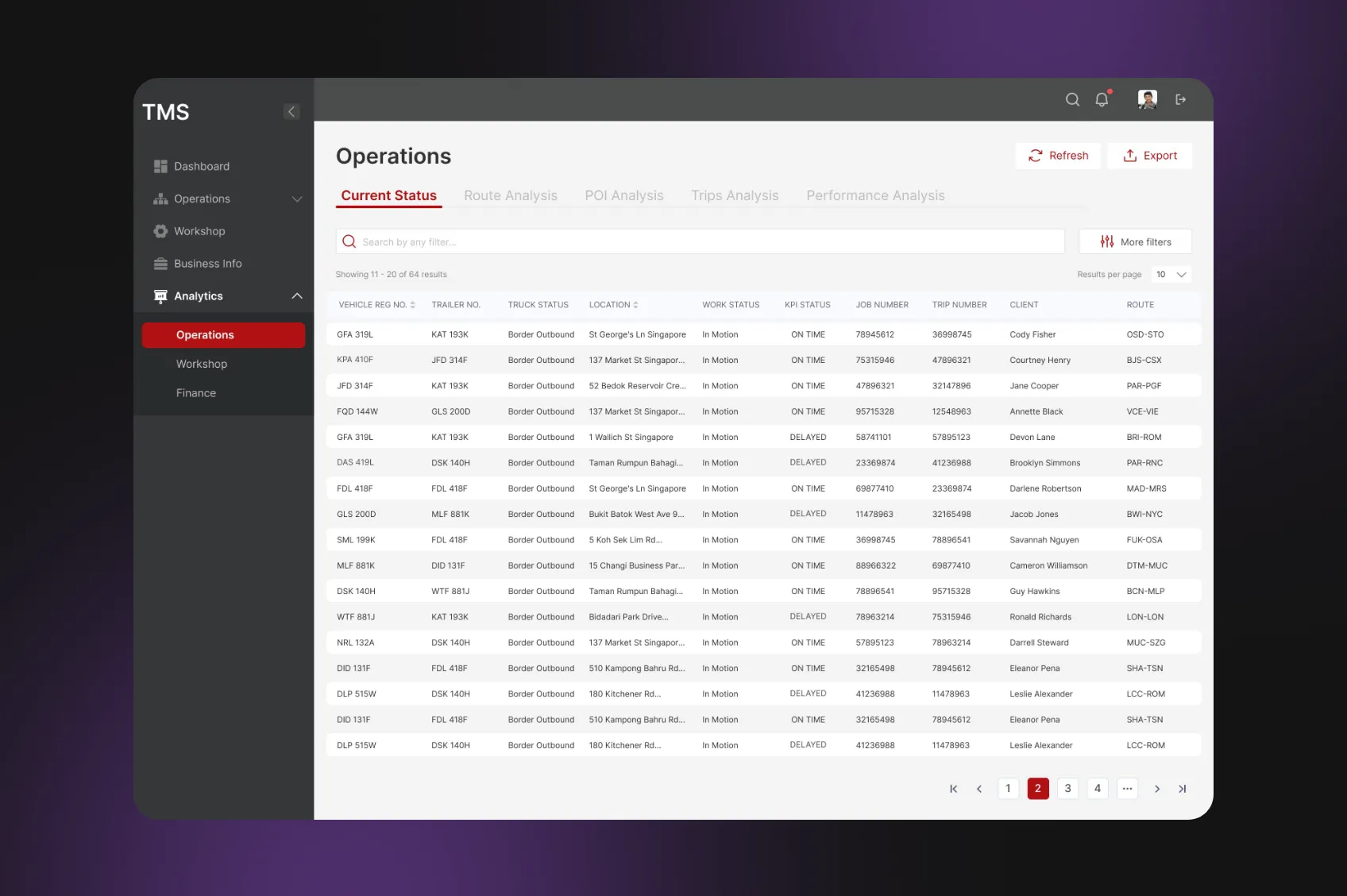
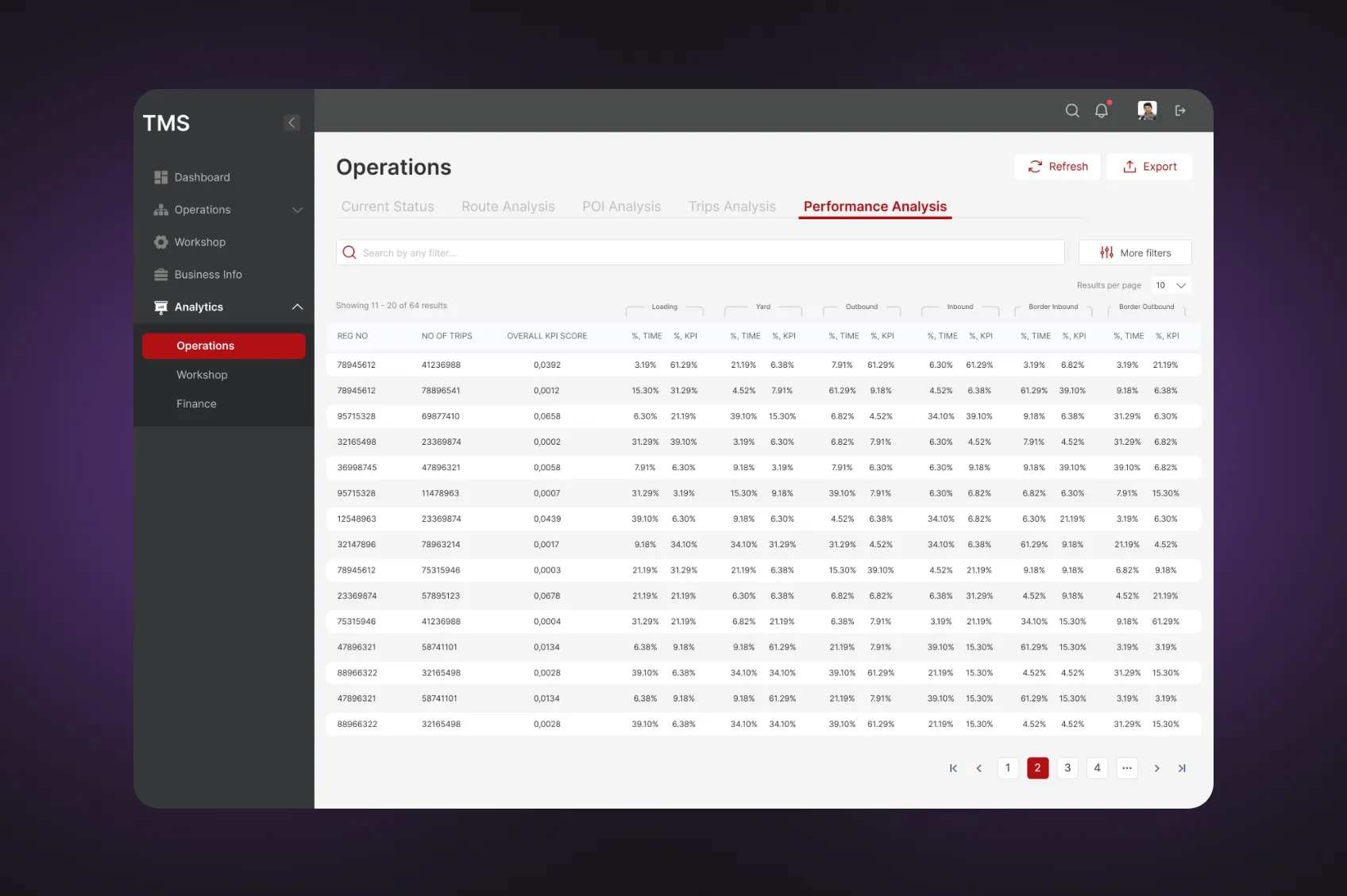
For quick access to key performance indicators, the Dinamicka Development team created an intuitive TMS dashboard that transforms operational data into actionable insights. Users can create custom reports to evaluate fleet performance, analyze maintenance trends and driver behavior, verify compliance, and analyze costs.
During TMS software development, our engineers used stable technologies, such as Vite and React.js, alongside Typescript for frontend development to provide seamless system operation and prompt request processing.
Core TMS Capabilities
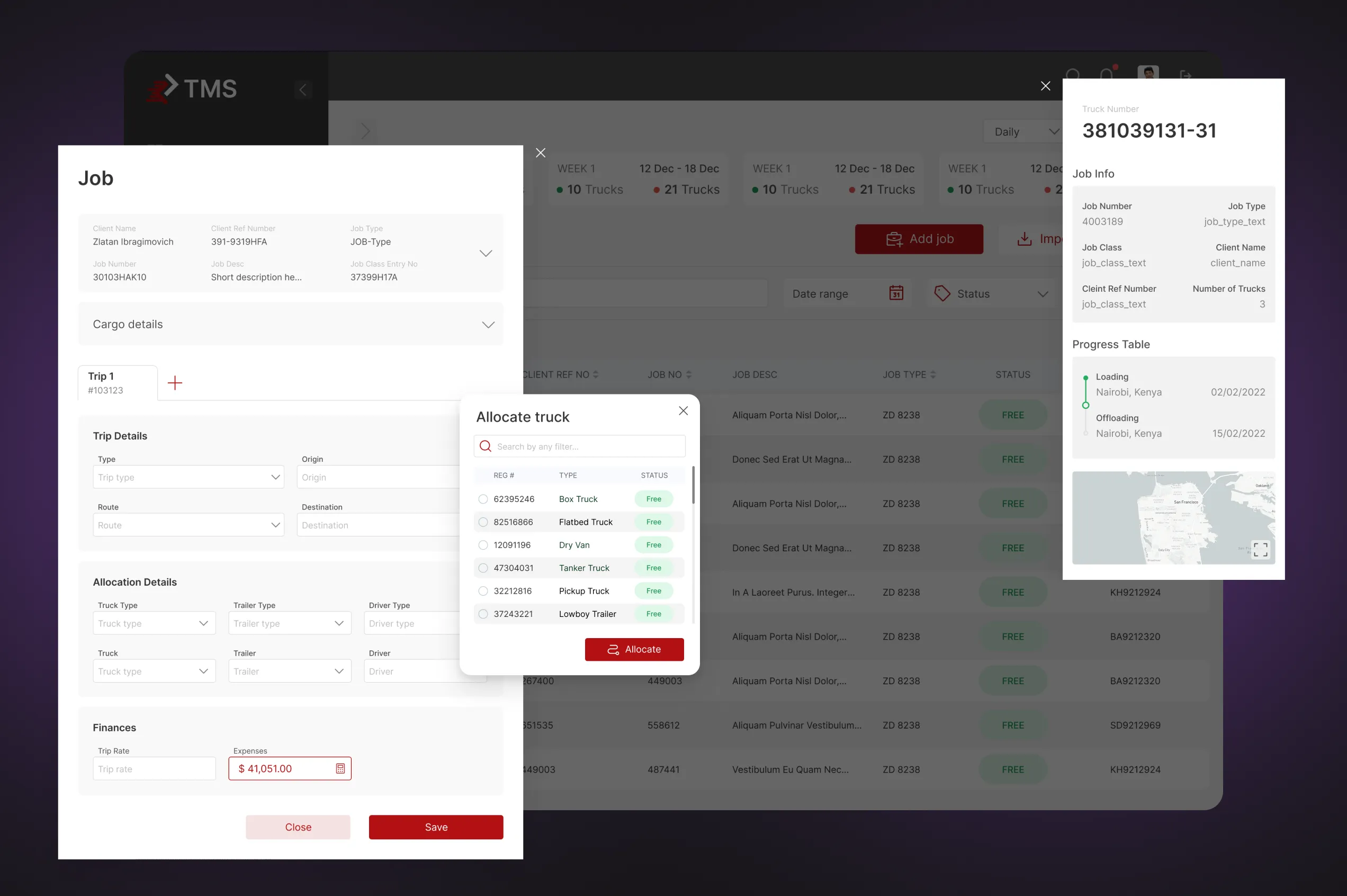
The completed Transportation Management System provides logistics teams with a centralized environment for managing day-to-day transportation operations. The platform allows managers to:
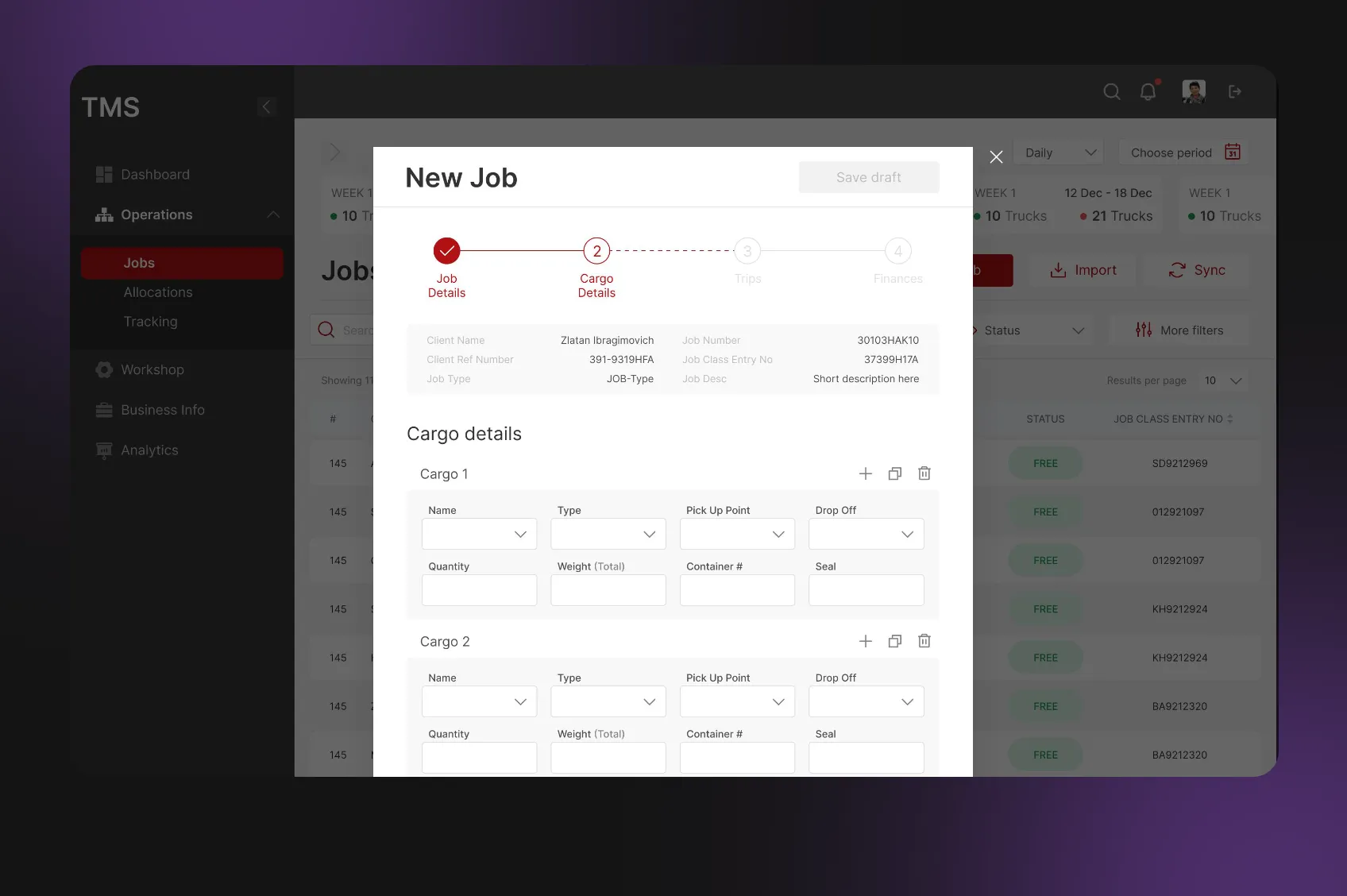
- Create and manage transportation jobs from a single dashboard
- Assign shipments to drivers and monitor delivery progress
- Track fleet assets, including trucks, trailers, and other equipment
- Manage employees, user roles, and operational permissions
- Generate operational reports and analytics for better decision-making
- Record vehicle repairs, maintenance activities, and spare parts information
- Manage transportation-related financial records within one system
- Access operational data integrated with the client’s existing transportation technologies
Project Outcome
With the custom transportation management software designed by Dinamicka Development, the client helps transform fragmented transportation processes of logistics companies into a centralized digital workflow adapted to their operational needs.
The offline-first architecture solved the connectivity problem that made real-time visibility impractical on Kenyan routes.
Dispatch planning time reduced after automated cargo allocation and dynamic routing replaced manual assignment workflows.
The transport management solution continues to operate as a SaaS product and core logistics management infrastructure for Kenyan transportation companies.
Do you have a similar transportation challenge? Let's discuss!
Schedule a free call with a Dinamicka business development manager to get a clear vision of your TMS software development.
More Cases
Dinamicka Development is proud of the results achieved through partnerships with various companies. So, now, we are happy to share the successful projects that we have implemented. Each of these cases demonstrates our ability to tailor our approach to clients' unique requirements and provide custom mobile development services that meet their expectations and needs.
1 / 3