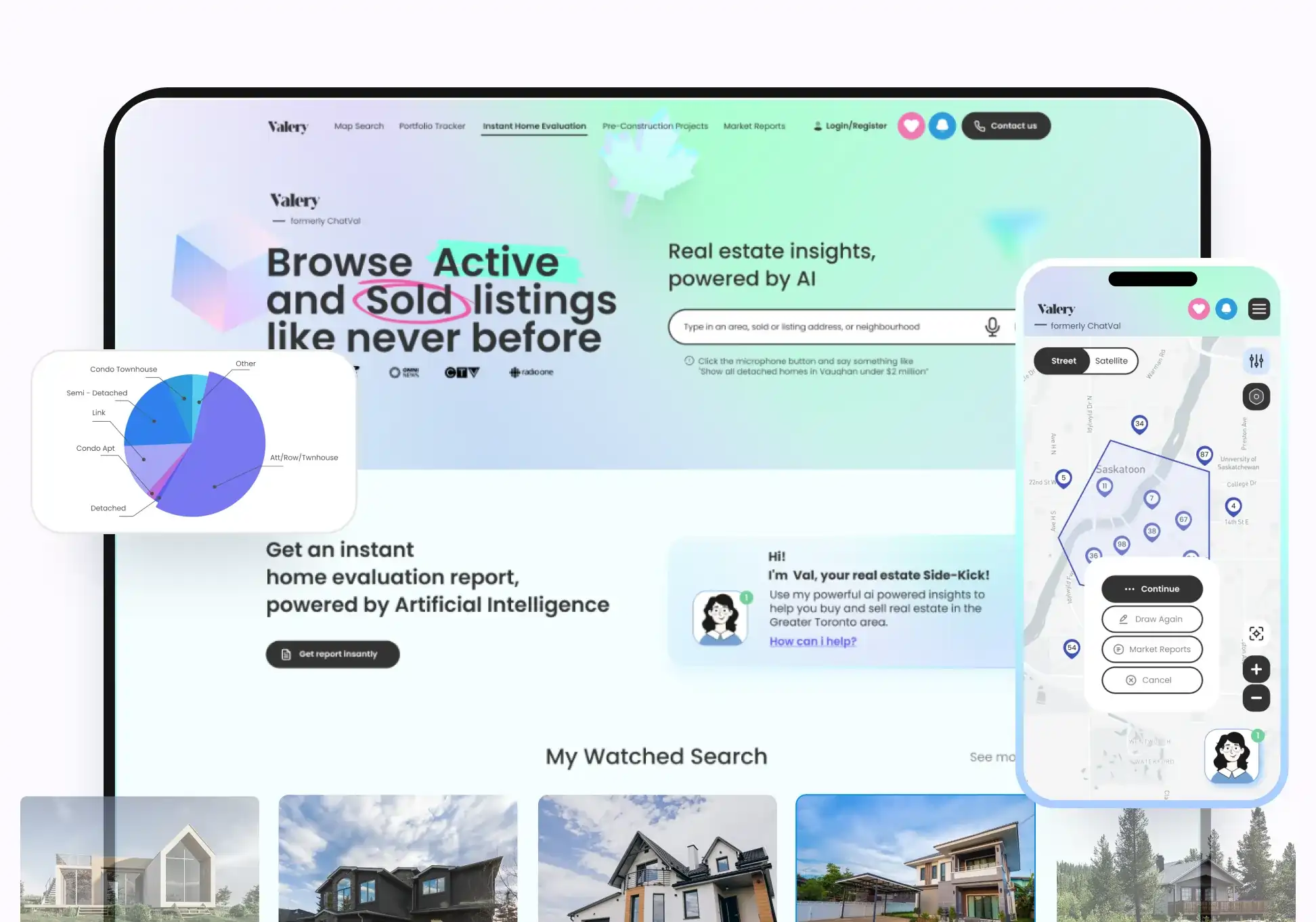
This real estate brokerage software was developed by our company from scratch. After a detailed analysis of the project requirements, our team began with web design and the future product architecture.
Property-First Design
The platform was designed around two distinct user contexts: public-facing property search and broker-facing CRM. Each solution required a different interface logic, but the same visual identity.
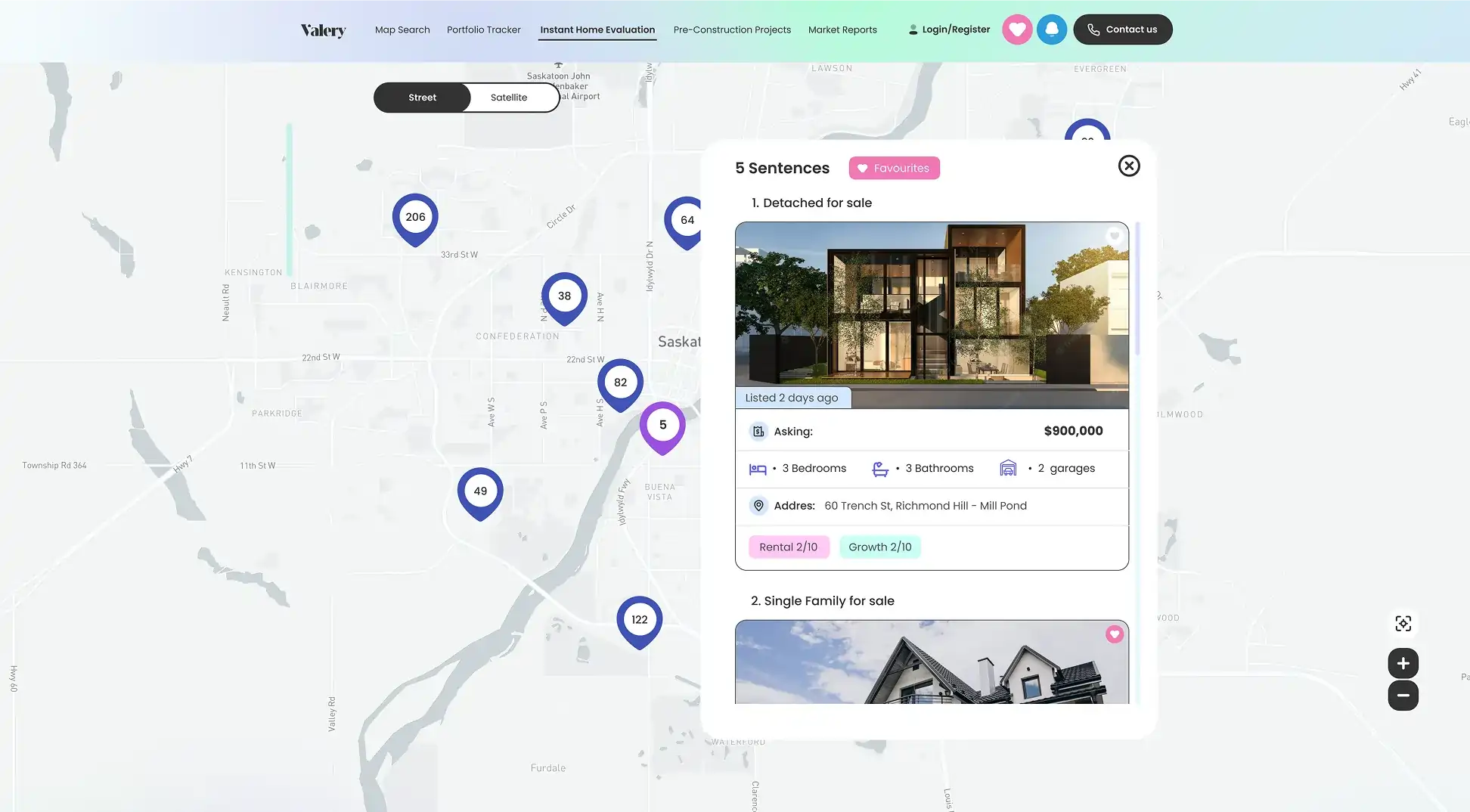
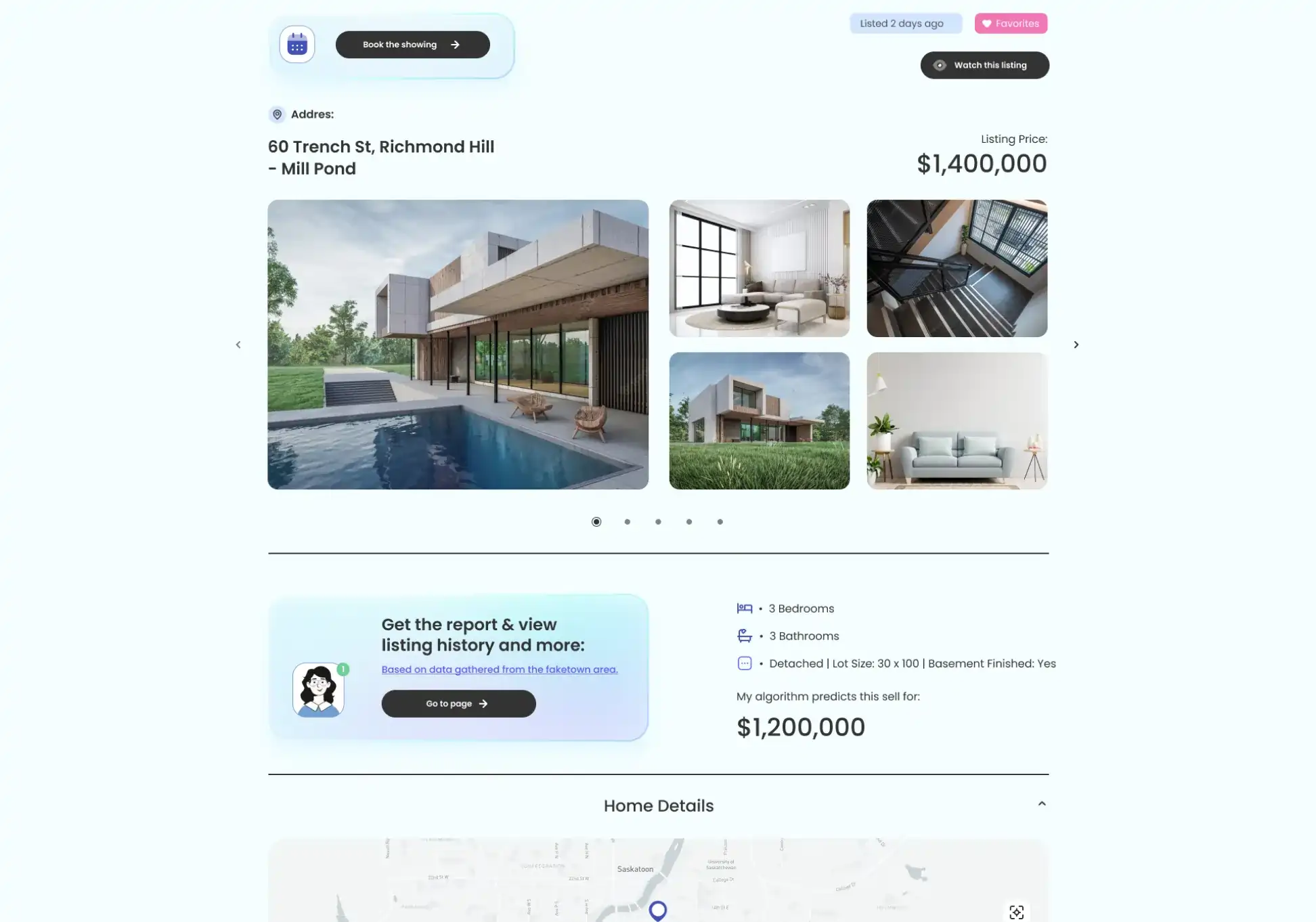
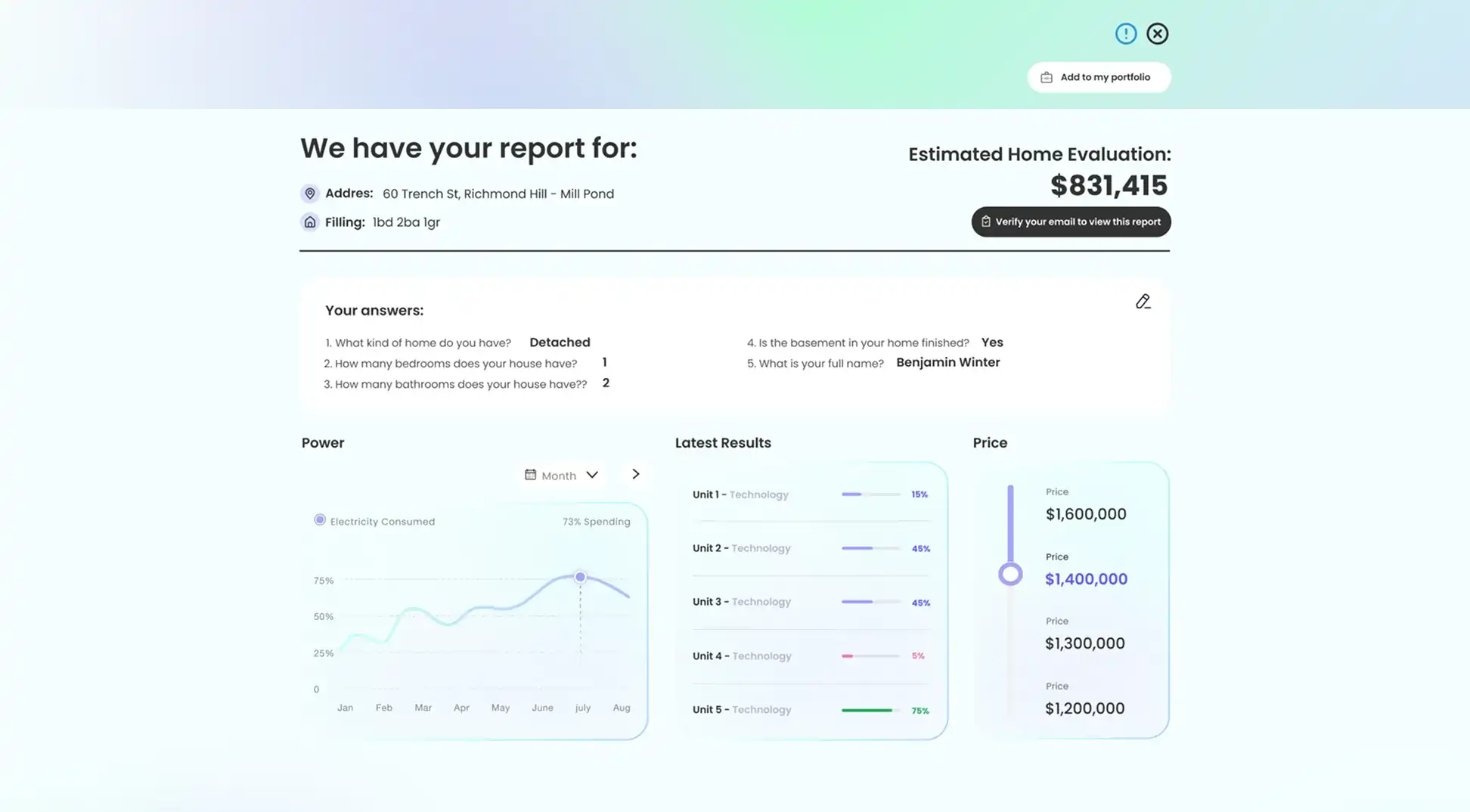
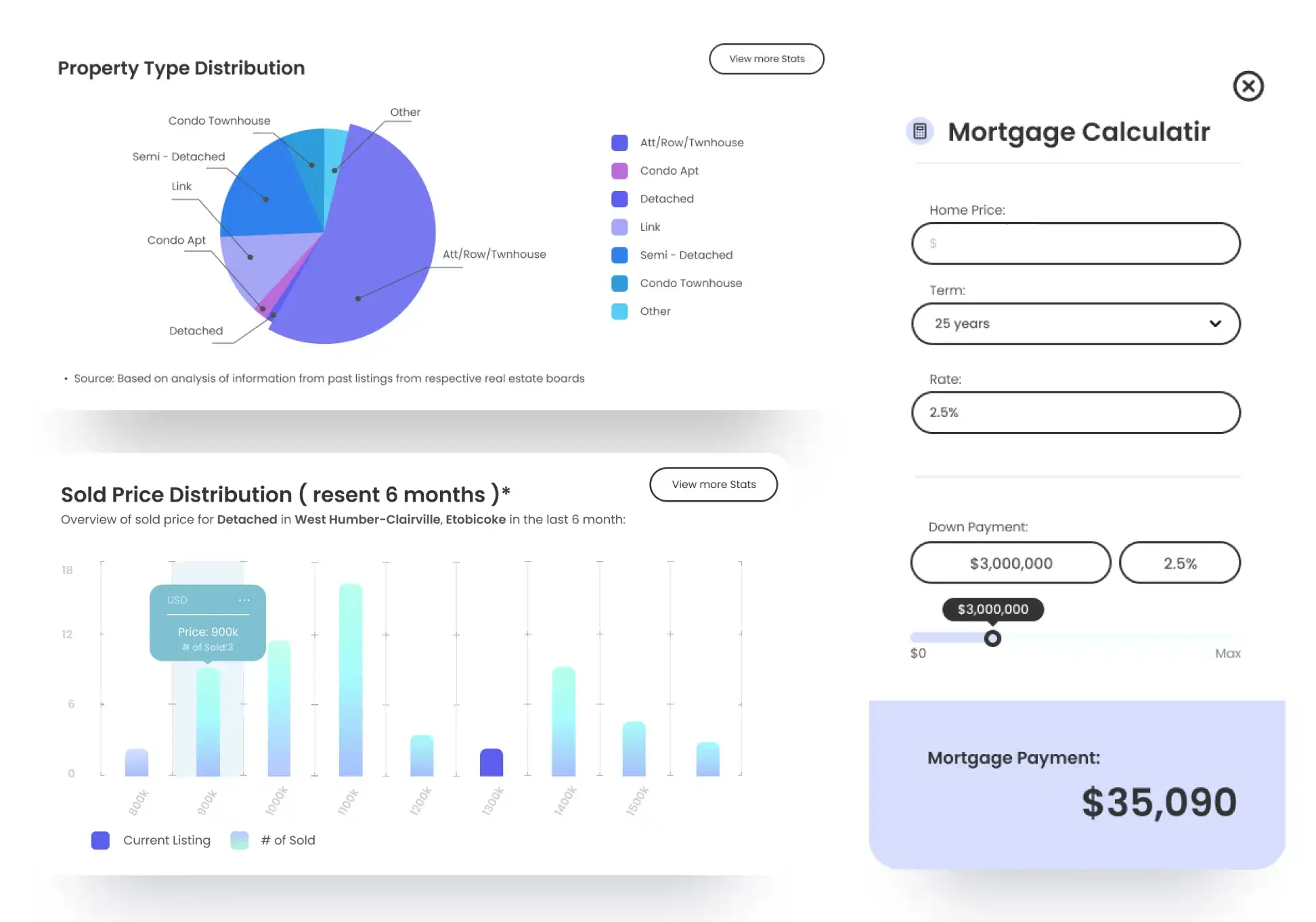
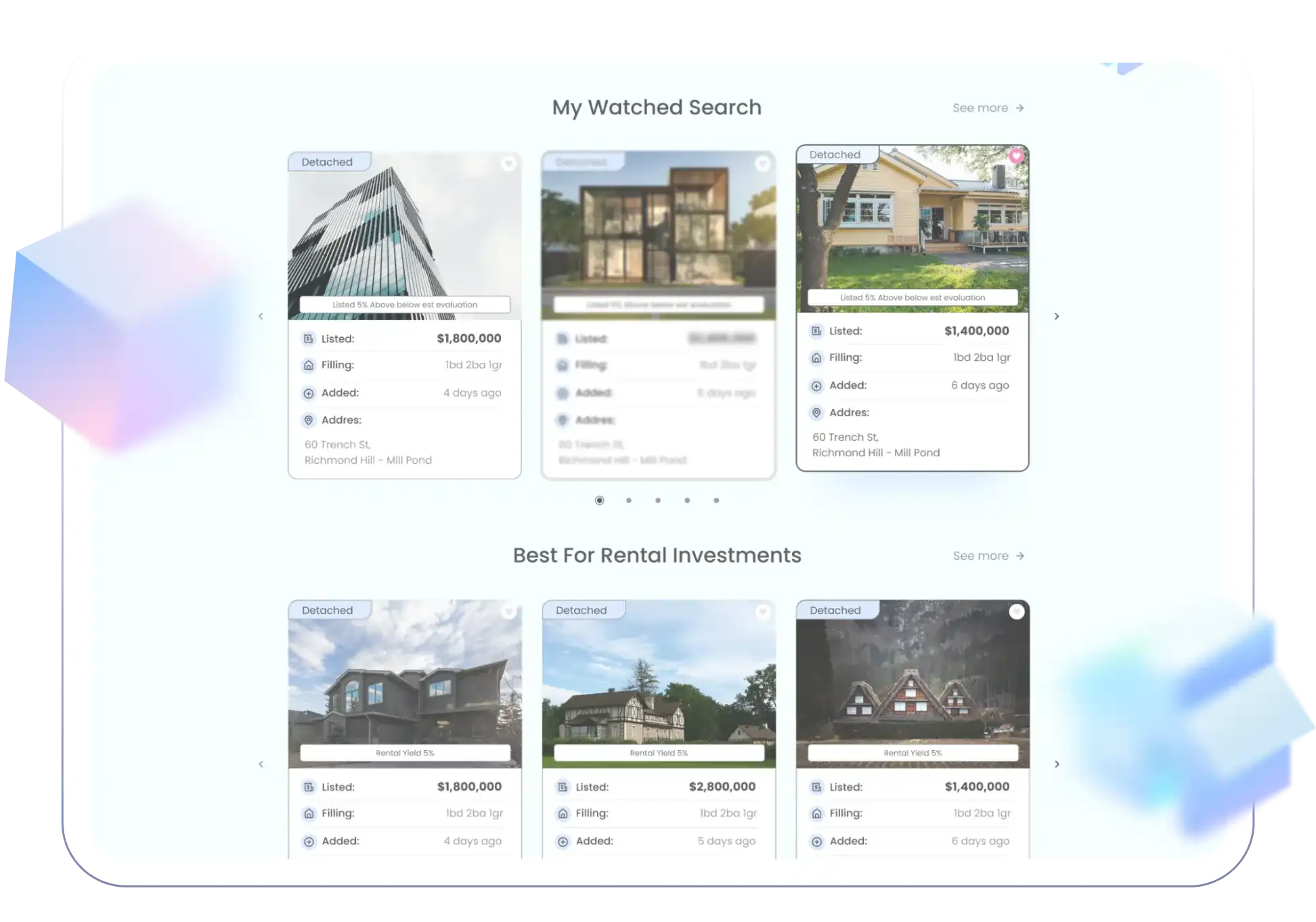
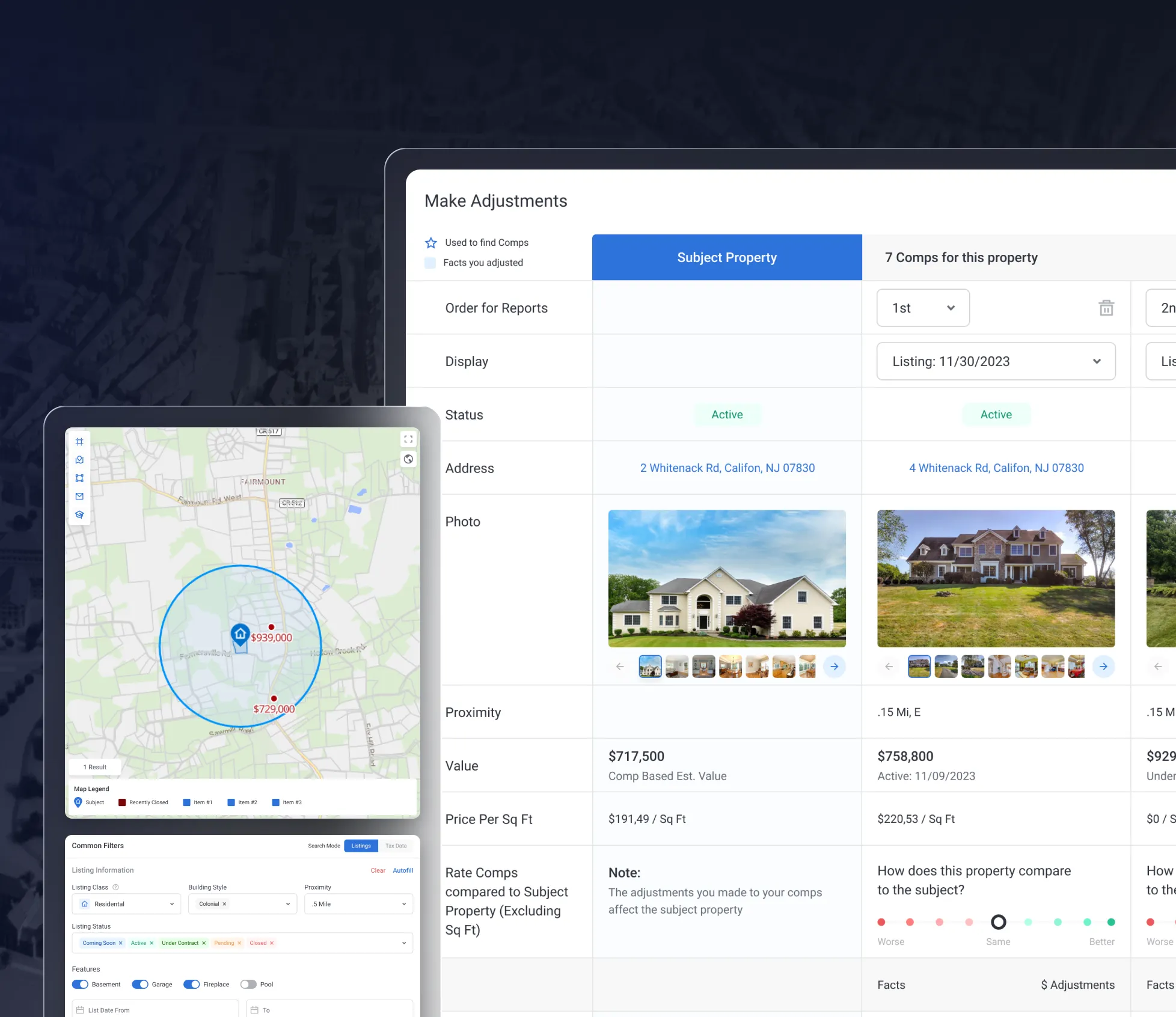
Creating the property analytics design, our specialists took into account the business need to display attractive and high-quality photos of property objects. Listing cards lead with high-resolution images, with key parameters – price, bedrooms, bathrooms, property type – visible without opening the full record. The individual listing view expands into a dense but structured layout:
- photo gallery
- key facts
- listing history
- comparable sales
- mortgage calculator
- cash flow analysis
- demographic data
All data from Statistics Canada on a single scrollable page.
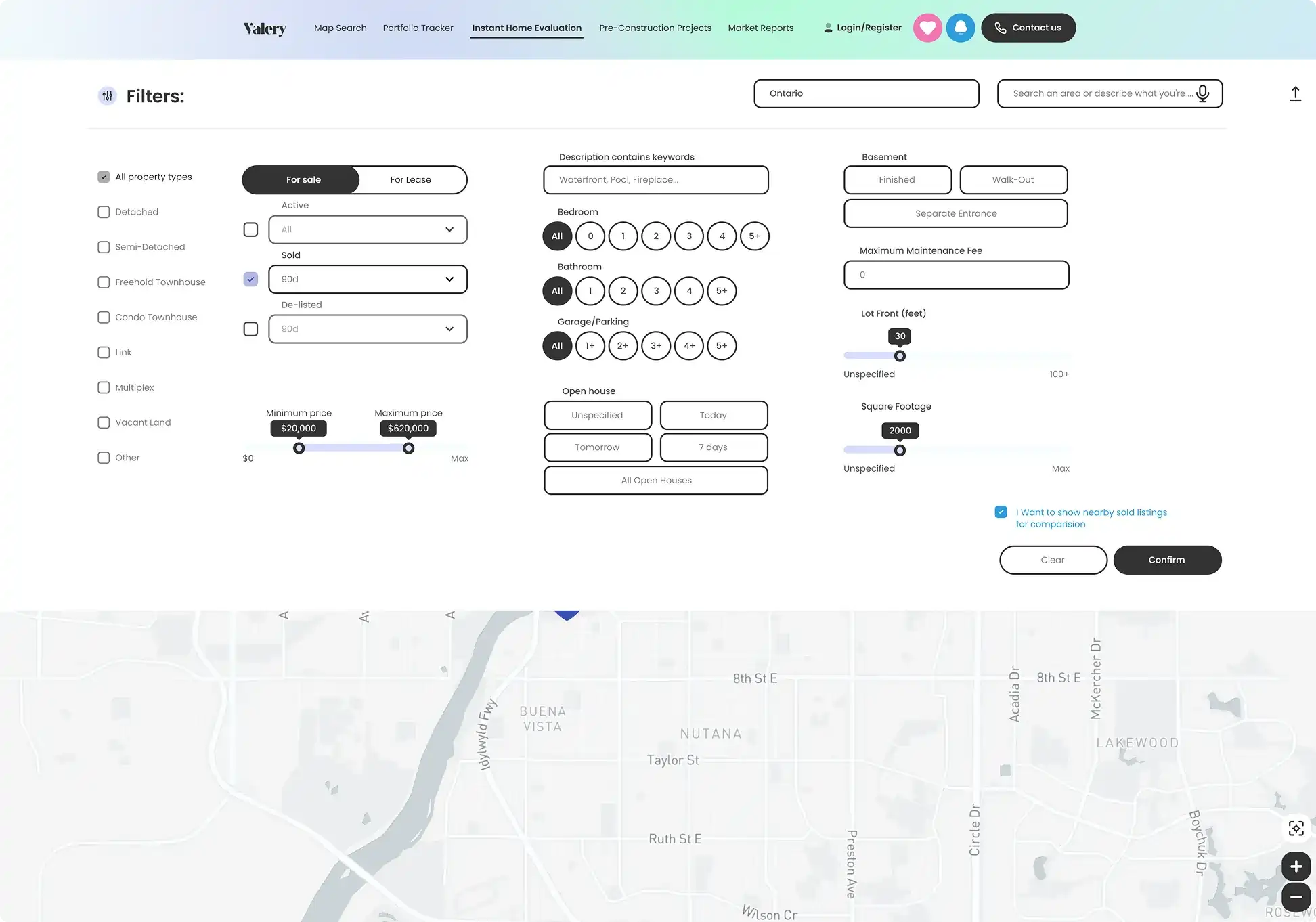
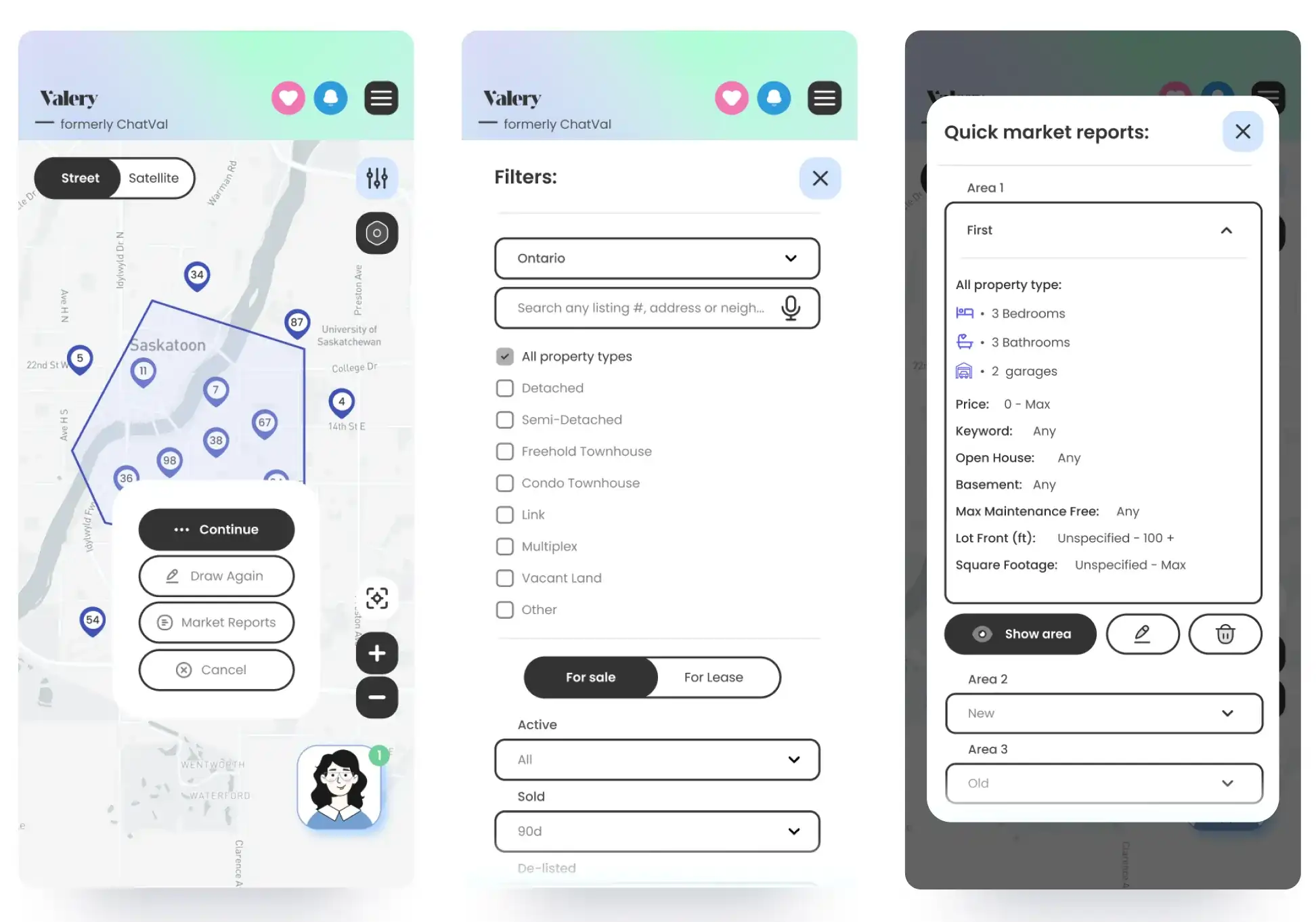
The filter system covers 15+ parameters including property type, price range, bedroom count, garage, basement type, open house dates, and square footage, with a map view that clusters listings geographically.
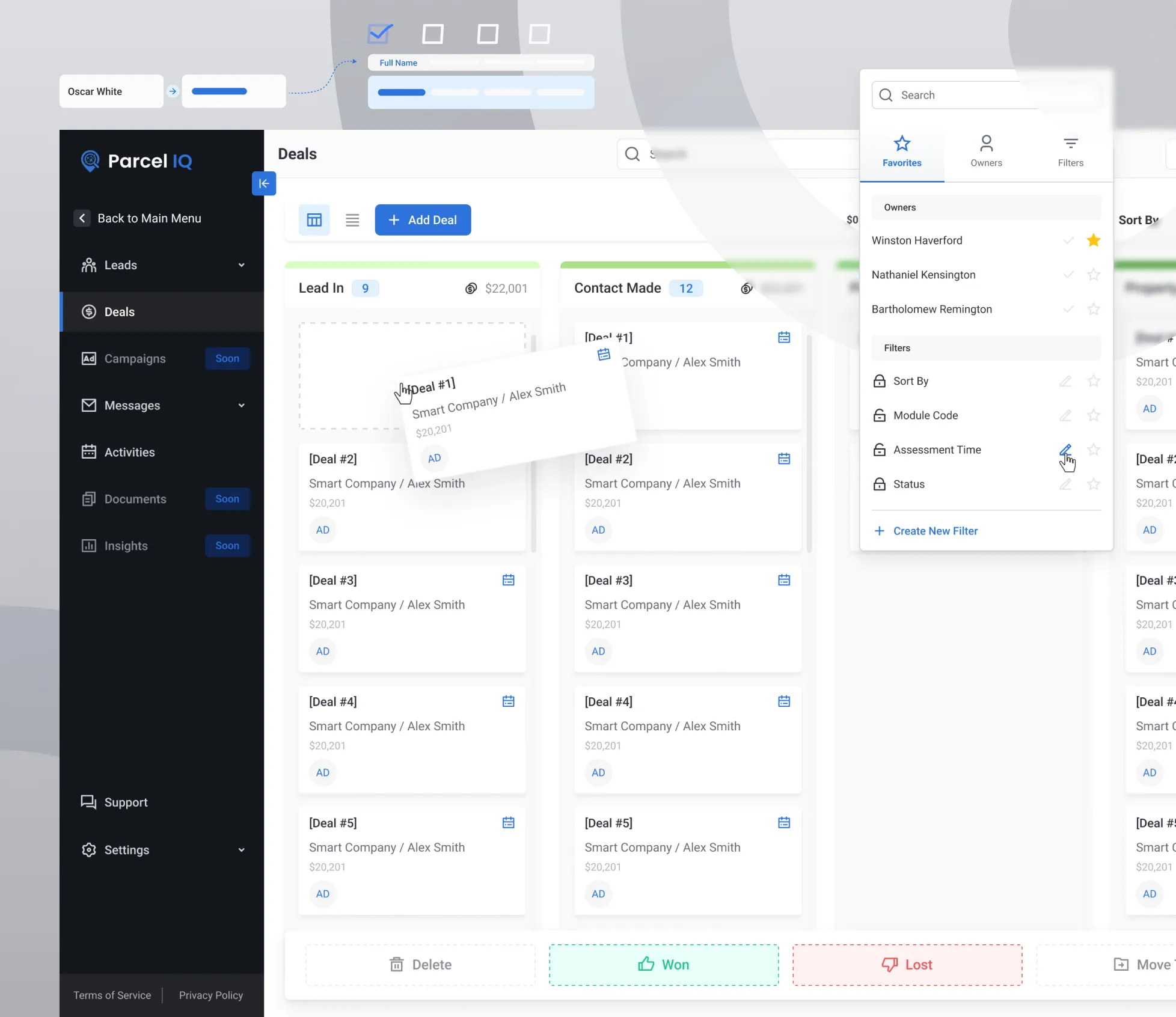
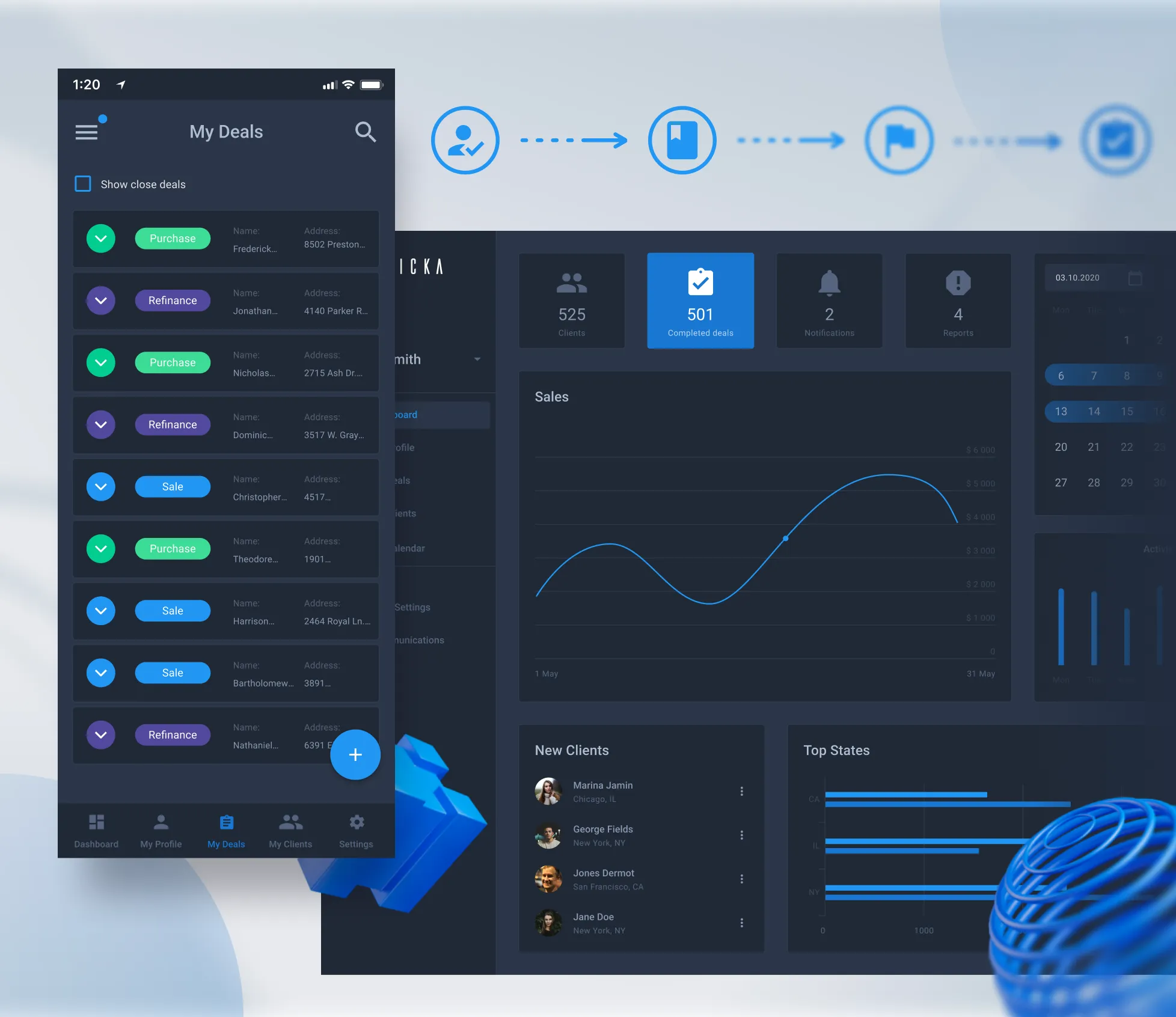
The broker CRM interface follows a different logic – dense tabular data with quick access to lead profiles, communication history, search alerts, and website activity. Each lead record surfaces the properties the contact viewed, when they were last active, and what their stated preferences are, giving brokers context before the first call.
Performance-Oriented Development
The frontend was initially built with Vite and React for fast web development iteration. The backend runs on Python with FastAPI – chosen for its high-performance async request handling, which matters when serving large volumes of PropTx listing data to concurrent users across Ontario. PostgreSQL process the primary data storage, while Azure Database manages the calculation-heavy workloads. such as property valuations, analytics, and market trend, keeping compute-intensive queries isolated from the main application database.
Property valuation and market report generation are powered by the Repliers API, which provides comparable sales data, market trend analysis, and other real estate analytics.
Project Challenges
At the later stages of the project development, a request for website SEO optimization was provided by clients. This required server-side rendering implementation, which, in turn, made the team migrate the project to another technology. That was a serious challenge posing some risks but the team managed to cope with it and ensure proper operation of the real estate analytics platform after migration.




 Next.js
 PostgreSQL
 Python
  Vite
Vite